A compact town built around work and movement
Klippan is a small railway and industrial town in north-western Skåne, where the central streets meet the wooded banks of Bäljane å and the larger Rönne å. Its character is not that of a preserved old town: much of what visitors read in the streets belongs to the period when a rural meeting place became a station settlement, a manufacturing centre and, later, a service town. Red brick, modest workers’ housing, the station precinct and the striking S:t Petri Church make that layered story unusually legible.
Statistics Sweden counted 9,049 people in the statistical built-up locality of Klippan on 31 December 2023. This figure describes the contiguous urban settlement, or tätort, not the much larger municipality, which also includes places such as Ljungbyhed and the countryside around them. The distinction matters when comparing population figures or planning a visit.
Åby, the paper mill and the railway
Before it was called Klippan, the settlement was Åby, a farming village on the road between Helsingborg and Kristianstad. The County Administrative Board records a coaching inn and post station here in the 17th century, with a market right granted in 1767 and a court serving the surrounding district. The county account distinguishes the inn’s appointment in 1668 from its establishment in 1683. These are documented civic functions, not evidence that the modern town already existed.
The paper mill beside the Rönne River gave the place a new economic centre. The municipality dates the mill’s origins to 1573 and says a paper machine—the first in Sweden—was installed there in 1832. The regional heritage account adds useful nuance: large-scale paper making developed in the area during the 17th century, and the name Klippan first appears in archival material in 1649. The railway arrived in 1875. The mill helped finance a substantial red-brick station, built with brick from its own works; the station was named Klippan rather than Åby. When Åby became a market town in 1945, it formally took that name.
Paper was only one strand of the industrial economy. A chrome-leather factory opened in 1906 and made leather for footwear, furniture and bookbinding before production ended in 1988. The municipality dates the area’s clean-up to the years after that closure; the former industrial ground is now Läderbackarna, a green public space. A brickworks founded in 1898 became known for its pink-toned brick and closed in 1986. The paper works, by contrast, still produced paper when the municipality’s history page was checked. The company describes its own history somewhat differently from the municipality, so the 1573 date is best understood as an origin story rather than a claim of uninterrupted production on the present footprint.
Architecture, culture and a changed landscape
The station district preserves a strong piece of industrial infrastructure: the red-brick station, an engine shed and a water tower from the steam era. Around Storgatan and Järnvägsgatan, surviving turn-of-the-century buildings record the growth of shops and workshops. The 1915 town plan introduced curving, garden-city streets and detached houses; the county heritage inventory also notes early twentieth-century villas and later functionalist architecture. These are ordinary streets first, but a slow walk shows how the town expanded beyond its former market square.
In the central park stands S:t Petri Church, designed by Sigurd Lewerentz and built between 1962 and 1966. Its brick exterior and carefully composed interior mark a distinctly modern chapter in Klippan’s public life. The parish notes four bells carrying poems by Bo Setterlind and a tapestry by Sven X:et Eriksson woven by Barbro Nilsson. The church was dedicated on the first Sunday of Advent in 1966. Its listed visiting hours are useful for planning, but confirm access and guided-tour arrangements before travelling.
Klippan also developed a reputation for music. In the late 1970s, a local music association and the basement studio associated with the music school helped shape what became known as Klippanpop. The municipality identifies Kriminella Gitarrer, The Push, Noise and Torssons among the groups connected with this scene; the recordings and independent label Svenska Popfabriken made a small town part of Sweden’s wider alternative-music story. Kulturhuset Sågen keeps a cultural venue in the centre, while municipal visitor information points to local design, heritage and events across the surrounding area.
Walk from the old factory ground to the river
For a short outing on foot, Cösterslingan starts at Läderbackarna in central Klippan and heads towards the allotment area beside Bäljane å. The municipality lists the route as 3 kilometres. Its page describes a gently falling first section followed by largely level walking, with benches and barbecue places; it marks the route as suitable for a stroller but not wheelchair-accessible. This is a meaningful walk through a former contaminated industrial site that has been remediated and returned to public use, not merely a nature trail detached from the town’s history. Check the municipality’s current notices for maintenance, access and seasonal conditions.
The broader landscape offers another scale of excursion. Söderåsen National Park lies partly within Klippan Municipality and partly within Svalöv Municipality; its entrances are at Skäralid and Röstånga, away from Klippan’s centre. The official park information lists bus 518 at both entrances and provides trail maps and visitor-centre information. Klippan’s railway station and buses make the town a practical base, but connections and park services change, so check current Skånetrafiken timetables and Naturum opening information before setting out. In town, the station area, S:t Petri and the river walk make an easy half-day route with enough history to explain why this is a place of industry as much as scenery.
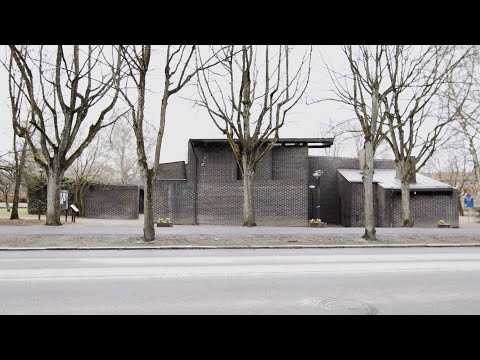 Klippan in three films: S:t Petri, the heritage railway and Söderåsen
 The title “Klippans Veteranjärnväg” and the uploader alltidstibbe are confirmed in YouTube’s public metadata; the player gives 10 August 2016 and 7:36. The Swedish visitor listing for Klippans Veteranjärnväg links to this film and describes the railway association’s steam-locomotive heritage. The review keeps to that documented connection and the checked title; it does not treat a past railway presentation as proof of a current departure or operating day. Check the association’s own notices before making a trip.
 “Söderåsens Nationalpark, vår - Skåne Sweden” was published by Wilnerzon - Sweden on 27 May 2021 and runs 12:03 according to the checked player metadata. Its published description names Skäralidsdalen, Kopparhatten, Hjortsprånget and Naturum. The park spans Klippan and Svalöv municipalities but its entrances lie outside Klippan’s town centre, so this film works as a regional extension to a town visit. It cannot confirm current trail conditions, transport or seasonal visitor-centre hours.