a Berry stronghold, the Saint-Roch museum and a town of guitars
Between Châteauroux, Bourges and Vierzon, Issoudun combines an old fortified centre with a substantial cultural life. The Tour Blanche dominates its historical image, while the Hospice Saint-Roch museum, older streets and musical events reward a longer stay. This Indre town remains a place of employment and everyday services as well as a heritage destination.
| Municipal population, 2023 reference | 11,159 |
|---|---|
| Approximate geographical area of the commune | ≈ 37.15 km² |
Population at 1 January 2023, within municipal boundaries at 1 January 2025; official figure in force from 1 January 2026. The area covers the whole commune, not only the built-up centre.
An ancient site in Berry
Evidence of human presence more than 2,000 years before the Christian era has been reported at Issoudun. The meaning of its early name remains uncertain, and that antiquity does not establish a precise foundation by a named ruler or people. Its position near the Théols and at a junction of Roman roads helped the settlement develop.
Agricultural production and leatherworking later contributed to local prosperity. The great fire of 1651 marked a major break in the town’s history. In another period, Balzac used Issoudun as the setting for La Rabouilleuse. Reading part of the novel offers a different way into the town from the military story told by its walls and keep.
The Tour Blanche and competing kingdoms
In the late twelfth century, Issoudun stood between Capetian and Plantagenet possessions. Philip Augustus and Richard the Lionheart fought for this strategic stronghold. In 1195, Richard’s military commander Mercadier captured the town and strengthened its defences. Construction of the Tour Blanche belongs to this struggle for control.
The keep remains a key landmark, but the tourist office website consulted in November 2026 announces a seasonal closure for building works. Do not plan an ascent without confirmation that it has reopened. An exterior walk is still useful for understanding the site’s elevated position and the relationship between the fortress and the surrounding streets.
The Hospice Saint-Roch museum
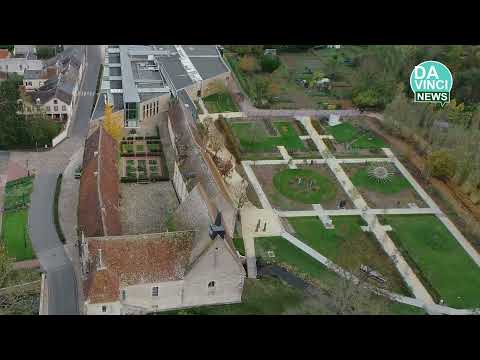
Founded in the twelfth century by the chapter of Saint-Cyr, the former Hôtel-Dieu sheltered pilgrims and people in need before developing its hospital role. Its present museum collections extend far beyond a conventional account of the town’s past.
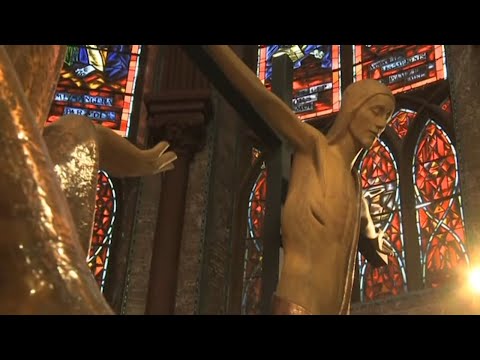
The historic pharmacy, sculpted Trees of Jesse, works associated with Cécile Reims and Fred Deux, the Oceanian collection and Leonor Fini’s salon offer markedly different experiences. Modern and contemporary art adds another dimension through a changing exhibition programme. Give the museum a substantial part of the day rather than treating it as a quick stop between buildings. Its website currently advertises free admission; check opening arrangements and the programme for your travel dates.
Guitars and street performance
The Festival Guitare was founded by Marcel Dadi in 1989. Around All Saints’ Day, it brings together concerts, workshops, encounters and instrument making. The Fêtes de la Tour Blanche, originally created for the keep’s eight-hundredth anniversary, developed into a festival of street arts.
These events show how the town’s heritage can provide a setting for contemporary performance. Consult the current edition’s programme before booking a trip around either festival. Outside event periods, the museum, streets and cafés still form a worthwhile itinerary, and a quieter visit makes it easier to appreciate details that might disappear behind crowds and temporary installations.
Sleeping and eating in town
Hôtel Restaurant Les 3 Rois stands on Rue Pierre-Brossolette in the town centre. The operator lists thirteen rooms and places the hotel about 500 metres from the railway station. Its restaurant offers the possibility of an overnight stop with a meal on site, subject to service days and reservations.
The tourist office also lists Inspiration Cognette on Boulevard Stalingrad among gastronomic restaurants. Compare current menus, booking arrangements and location rather than relying on old accounts of chefs or awards. A central overnight stay makes it easier to explore on foot and allows enough time for the museum without squeezing everything between two trains.
Connections and everyday life
Issoudun has rail services towards Vierzon, Châteauroux and Limoges, with some trains serving Paris-Austerlitz. Check that your chosen service actually stops here. The free TIG town transport operates on specified days and time bands, so it should not be assumed to run throughout every day.
Issoudun participates in the Territoires d’Industrie programme and has an industrial economy including aeronautical and manufacturing businesses. Anyone considering a move should assess employment, the location of a home and transport schedules together. Historic streets, residential districts and business areas offer different practical circumstances. A weekday visit that includes the station and ordinary shopping is a useful addition to a heritage-focused weekend.
Sources
- Mairie d’Issoudun : origines et histoire
- Tour Blanche : histoire des affrontements médiévaux
- Office de tourisme : fermeture de la Tour Blanche pour travaux
- Office de tourisme : ancien Hôtel-Dieu
- Musée de l’Hospice Saint-Roch : collections et programme
- Ville d’Issoudun : festivals
- Ville d’Issoudun : Territoires d’Industrie
- Hôtel Restaurant Les 3 Rois : informations de l’établissement
- Office de tourisme : restaurants
- Ville d’Issoudun : transports urbains
- SNCF TER : desserte d’Issoudun
- INSEE: official 2023 reference population
- French administrative API: municipal geography and area