Gravelines counted 11,430 municipal residents in 2023. At the mouth of the Aa, where fresh water meets the North Sea coast, this northern town brings together a compact historic centre, a seaside neighbourhood at Petit-Fort-Philippe and a modern industrial landscape. Water is not just scenery here: canals and moats define the old town, while the sea, port and river corridor continue to shape work and movement.
A frontier town written in stone and water
The municipality traces Gravelines to the medieval counts of Flanders. Its strategic position on a changing coastline made it a contested border town, and its defenses grew over several centuries. Charles V ordered major bastions in the sixteenth century; Vauban later reinforced the system with outer works and water-control features. The result is an urban enclosure whose star-shaped lines remain legible in the landscape. A walk along the ramparts is the clearest way to understand how a military plan became public space.
The fortifications are not an empty monument. Grass, gardens and water occupy the old defensive margins, and traditional bacôve boats offer a guided circuit around the walls. Petit-Fort-Philippe adds a different scale: the black-striped lighthouse guarded the channel from 1843 until 1985, and the wide beach and dunes make room for a coastal walk. Check local opening information before planning a boat ride or an interior visit.
Art, industry and a living port
Inside the old arsenal district, the Musée du Dessin et de l’Estampe originale turns a former powder magazine into a place for looking closely at printmaking. Its collection numbers about 22,000 works, and the displays range from historic prints to temporary exhibitions and workshops. Nearby, the marina and the port keep a working relationship with the water visible. Gravelines also belongs to the industrial Dunkirk coast: EDF identifies its nuclear generating station as one of the area’s principal employers. Visits are possible only through the plant’s public programme and advance registration, so it is best treated as a scheduled learning visit, not a walk-in stop.
Planning a visit
Gravelines works well as a day that alternates heritage and open air: start in the walled centre, take the rampart path, then continue toward the beach and lighthouse quarter. The TER station has services toward Calais Ville and Dunkerque, making those nearby cities practical rail gateways; consult the operator’s current timetable before travelling. Visitor services, museum hours and seasonal water activities also change through the year, so confirm them locally before setting out.
 Gravelines in three films: fortress, bacôve and coastal dunes
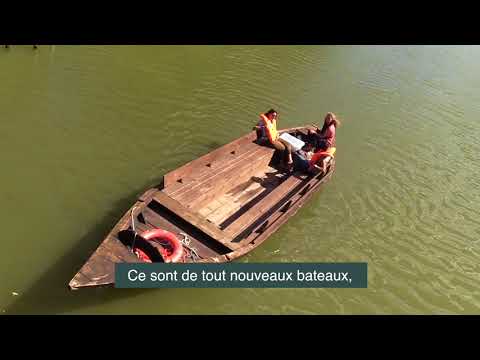 The municipality’s short bacôve film follows a traditional boat trip around Gravelines’ water defenses. Its close view of the canals and ramparts helps explain why the moat is part of the town’s design, rather than a scenic accessory. Pair it with a footpath circuit: the boat perspective makes the star-shaped fortification easier to read from the water.
 A municipal educator leads this short visit through the dunes at Petit-Fort-Philippe. The video shifts attention from the military centre to the coastal habitats and walking landscape outside it. It is a useful visual preview for visitors who want to add sea air to a heritage day, while local information should be checked for access and seasonal conditions.