Calais is a coastal city whose identity is shaped by both the Channel and the industries that grew around it. Insee recorded 67,571 residents in the commune in 2023. The historic centre, the old port and the broad seafront form different parts of one city, while the story of lace links Calais with its former neighbour Saint-Pierre-lès-Calais. For visitors, that combination means a day can include a working waterfront, a technical museum, civic architecture and open sea air rather than a single postcard viewpoint.
Two urban histories joined in one city
The municipal account of the town hall explains that the union of Calais and Saint-Pierre-lès-Calais in 1885 brought together a fortified port town and a rapidly urbanizing industrial centre. Saint-Pierre’s lace workshops expanded after the arrival of the first machines in 1840, while the archives trace the arrival of Leavers machines from England in 1816. That history is best read as skilled industrial work and migration across the Channel, not as a timeless local legend. The town hall, inaugurated in 1925, and its tall belfry give this joined civic history a visible centre.
Lace, architecture and the waterfront
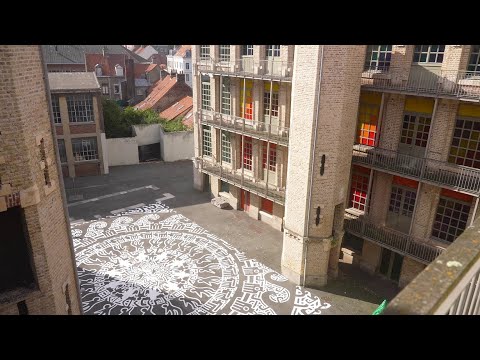
The Cité de la Dentelle et de la Mode is installed in a former lace factory. Its galleries explain the techniques and machines, display lace and fashion collections, and sometimes show large Leavers looms in operation. It is the strongest place to understand why the craft became both a local industry and a material used by contemporary designers. Along the coast, Fort Risban stands near the harbour entrance; municipal archives trace its defensive history to a medieval structure repeatedly altered as control of Calais changed. The beach promenade now offers a contrasting open landscape, with the Dragon of Calais adding a moving mechanical spectacle on selected operating days.
A port economy with visitors in the city
Calais remains a transport and logistics centre as well as a visitor destination. The port authority describes the port as a major cross-Channel passenger and freight gateway connecting France with the United Kingdom and continental Europe. Insee’s local establishment data also show the weight of commerce, transport and services in the city’s economy. The port itself is a controlled operational area, so visitors should use designated public viewpoints rather than assume they can enter working terminals. In the centre, cafés, shops, museums and visitor services make it easy to combine the lace museum with the town hall, seafront or a walk around the historic fort.
Arriving by rail and planning a coastal day
Calais-Ville receives TER services from Lille and Paris among other regional origins; the Lille–Calais route is listed by the regional rail operator. From the station, check the local walking and bus map for the museum and beach rather than relying on a fixed transfer time. A good first route pairs the town hall and belfry with the Cité de la Dentelle, then follows the waterfront toward Fort Risban and the beach. A ferry connection to Dover is part of the city’s wider geography, but boarding arrangements and port access are separate from visiting the centre. Confirm train schedules, museum hours and Dragon operating times before setting out.
 Calais on screen: lace-making, the Dragon and the seafront
 This 4K film follows the Dragon of Calais as a moving coastal attraction. It gives a sense of the scale and public spectacle of the mechanical creature, rather than a historical account of the city. The Dragon’s operating schedule varies, so visitors should check the official programme before travelling to the seafront.
 The City of Calais records the inauguration of the Calais LA Plage seafront project in this film. It offers a dated view of the promenade and its public-space improvements, useful for understanding how the waterfront has been reshaped. It documents the 2021 event, not present-day works or current beach services.