Causse heritage, a wildlife park and stays at the Grand Couvent
Gramat is a small market and service town in Lot, on the limestone plateau near Rocamadour and Padirac. Its old streets, wildlife park and Alzou valley walks give it attractions of its own. Hotels and a railway station also make it a practical base for exploring the Causses du Quercy over several days.
| Municipal population, 2023 reference | 3,512 |
|---|---|
| Approximate geographical area of the commune | ≈ 57.15 km² |
Population at 1 January 2023, within municipal boundaries at 1 January 2025; official figure in force from 1 January 2026. The area covers the whole commune, not only the built-up centre.
Human occupation long before the town
Cuzoul de Gramat is an important research site for Mesolithic hunter-gatherers and the changes leading towards the Neolithic. Work by the TRACES laboratory demonstrates human occupation far earlier than the historic town. This archaeological depth should not be turned into an invented foundation date for the present settlement.
The name Grammatum appears in the tenth century. During the Middle Ages, trade and nearby Rocamadour’s pilgrimage helped a commercial centre develop. The Hundred Years’ War and later religious conflicts interrupted its prosperity. Livestock fairs and the railway subsequently strengthened Gramat’s role as a service centre for the causse. These different periods explain more than a single claim about an ancient founder would.
Walking the old centre
The market hall, Rue de l’Horloge and its tower form a straightforward route through the centre. Smaller streets and older houses are best explored on foot, without expecting the town’s interest to be concentrated in one spectacular monument. On market days its trading role is still visible in ordinary use.
Saint-Pierre Church is an early-twentieth-century Gothic Revival building rather than an unchanged medieval church. Its protected organ is older, built by Junck in 1853 for the previous church. Consider the architecture and instrument as separate layers of local history. Ask about the Pays d’art et d’histoire guided visits if you would like a more detailed introduction to the streets and their development.
The wildlife park and the limestone landscape
Parc animalier de Gramat focuses on European wild and domestic animals. Enclosures and viewing areas use a landscape of woodland, sinkholes, limestone and dry-stone walls. The visit connects the animals with the characteristic surroundings of the causse.
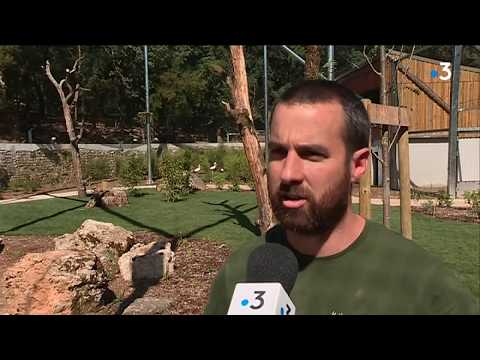
Allow time for an outing rather than treating it as a quick roadside stop. Keeper activities, special experiences and particular visits have their own schedules and booking conditions. Check what is included in admission and consult seasonal opening times. Watching animals also calls for patience; the pace differs from a short circuit around a town garden, and individual encounters cannot be guaranteed simply from a photograph or promotional clip.
The Alzou and Moulin du Saut
The ruined Moulin du Saut in the Alzou valley records the use of water power in a confined landscape. The eighteenth-century building adapted to the terrain, adding a story of rural industry to the cliffs and wooded slopes.
The municipality describes a walk of roughly four kilometres, but confirm the start and variant on the route sheet you choose. Suitable footwear and current path conditions matter. The appeal lies in the relationship between construction and landscape, rather than only reaching a viewpoint. Rocamadour and Padirac cave provide other nearby excursions. Treat their visits as separate arrangements, with the necessary reservations, instead of assuming every regional attraction fits into one unplanned afternoon.
Staying at a living convent
Grand Couvent remains the headquarters of the Sisters of Notre-Dame du Calvaire, founded in the nineteenth century by Pierre Bonhomme. Buildings and gardens also welcome visitors and groups, alongside hotel accommodation. Religious life therefore remains part of a place that has opened to a broader range of stays.
Its hotel provides rooms within Gramat, close to the railway station. The restaurant highlights fresh, seasonal ingredients. Lunch is reserved for groups, while dinner has separate arrangements and may have closing evenings in low season. Book the meal directly, including when staying overnight. Lot Tourisme also identifies other local hotels, including Le Relais des Gourmands near the station and Hostellerie du Causse away from the old centre.
Rail connections and a longer stay
Gramat station has services towards Brive-la-Gaillarde and Rodez, calling at the stops shown for the chosen train. Brive offers connections for longer journeys, with Figeac another important town on the regional axis. Check actual timetables and any replacement coaches before committing to activities.
Shops, accommodation and its position on the plateau make Gramat a useful multi-night base. Anyone considering a move should compare walking access from central addresses with the transport needs of a countryside property. The station helps with arrival but does not put every surrounding hamlet or visitor attraction beside a stop. Spending ordinary weekdays here, as well as busy holiday periods, gives a more useful impression of local routines and services.
Sources
- Université Toulouse–Jean-Jaurès, laboratoire TRACES : Cuzoul de Gramat
- Lot Tourisme : histoire, monuments et environs
- Office de tourisme : ville et patrimoine
- Ville de Gramat : espaces publics, Moulin du Saut et Grand Couvent
- Parc animalier : paysage du causse et démarche de visite
- Parc animalier : horaires, animations et réservation
- Grand Couvent : hôtel, accueil et vie du lieu
- Grand Couvent : restaurant et services
- SNCF : gare et dessertes de Gramat
- INSEE: official 2023 reference population
- French administrative API: municipal geography and area