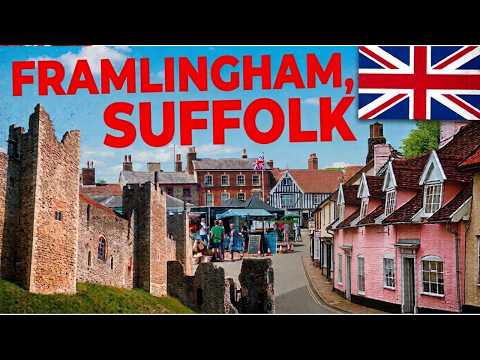
castle walls, Mary Tudor and the streets around Market Hill
Framlingham is an inland market town in Suffolk, where castle walls rise above a mere and a compact centre of shops, houses and places to eat. The fortress is the main landmark, but a walk through Market Hill and towards St Michael’s Church gives the town a more complete shape. Its history joins the medieval Bigod family to the accession of Mary Tudor and, later, to the care of the local poor. Staying overnight allows the castle, church and surrounding landscape to be enjoyed at different times of day, rather than as a single hurried stop on the way to the coast.
| Usual residents, Census 2021 | 4,405 |
|---|---|
| Statistical area | Civil parish; December 2022 boundaries |
Census date: 21 March 2021. This parish count is distinct from the built-up area or a wider urban district.
A medieval stronghold and its changing owners
The surviving castle belongs chiefly to the later twelfth-century development of a fortress associated with the Bigod family, earls of Norfolk. Its curtain wall encloses an open court rather than gathering around the great central keep that many visitors expect. The wall walk, when open, makes this defensive arrangement particularly clear and gives views over both the interior and the landscape outside.
Framlingham was drawn into the struggles between King John and his barons. Roger Bigod was involved in the events surrounding Magna Carta, and the castle surrendered to John in 1216. Later ownership passed through other powerful families, including the Brothertons and Howards. The buildings and displays therefore tell the story of a changing noble estate, not simply one medieval siege.
In July 1553 Mary Tudor gathered supporters at Framlingham during the succession crisis following the death of Edward VI. She was at the castle when news arrived that she had been proclaimed queen. This gives the site a direct place in the political events that brought her to the throne. The town’s association with Mary is most meaningful when set against that short, uncertain period, rather than treated as a vague royal connection.
From aristocratic residence to workhouse
The castle’s later history is one of its most distinctive features. Sir Robert Hitcham bought it in 1635 and died the following year, leaving instructions connected with a workhouse and local charitable provision. Subsequent changes removed or adapted earlier buildings inside the walls. The surviving courtyard therefore combines a medieval defensive enclosure with structures linked to a very different social purpose.
The workhouse building dates from the eighteenth century. Its presence makes Framlingham an opportunity to consider poverty and welfare alongside the more familiar story of earls and monarchs. The people who lived and worked within the walls in later centuries occupied a place already burdened with a long political history. English Heritage’s interpretation helps connect these uses without presenting the interior as an untouched medieval palace.
A castle visit should include both the displays and the outdoor spaces. High sections of the wall walk are exposed, with stairs and changes of level; the grounds and exhibition areas offer a different experience for visitors who prefer to remain lower down. Ask about the current access arrangements for the specific parts of the site that matter to you.
Church, Market Hill and the mere
St Michael’s Church is another important place to explore the town’s connections with aristocratic families, including the Howards. Its monuments offer a more personal perspective on the names encountered in the castle’s history. The church also remains a place of worship, so a sightseeing visit should fit around services and other uses.
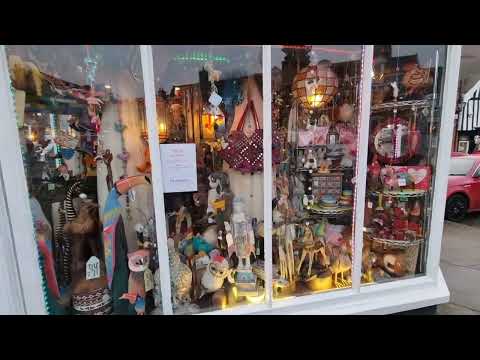
Market Hill provides a lively contrast to the castle grounds. Shops, food businesses and older houses frame the central space, with streets leading towards the church and outer parts of town. Take time to look at the varied building fronts rather than treating the centre only as a route between the car park and castle. Ordinary commercial life is part of Framlingham’s character.
The mere below the castle adds open water and wetland to the town’s setting. The views back towards the walls are quite different from those inside the courtyard. Paths around the lower landscape can be damp or muddy, especially after rain, and should be chosen according to current conditions. A shorter town walk can still combine Market Hill, the church and the castle approach without requiring a full countryside circuit.
A night in the centre
The Crown Hotel on Market Hill offers bedrooms, a bar and a restaurant in the heart of Framlingham. Its current operator website lists room options, while the town council includes it among local businesses. It is an option for visitors who want an evening meal and a walk around the centre without driving back from another village. Check room access and the kitchen’s current service separately from general bar opening hours.
A two-day stay gives the castle a leisurely morning, with the church, shops and mere later in the visit. Another day can extend into the Suffolk countryside or towards Woodbridge and the coast, which are separate destinations. Framlingham’s small-town services are useful to residents and visitors alike, while its hinterland remains rural. Anyone considering a move should test the particular daily journey to work or school and the distance from the intended property to shops and transport.
Planning the journey
Framlingham has no passenger railway station in the town. Wickham Market station is at Campsea Ashe, away from Framlingham itself, so a rail journey requires an onward connection. Ipswich is an important regional centre for planning a broader journey through Suffolk. The town council lists Katch, an on-demand connection linking Framlingham with Wickham Market station and Snape. Book and check its current operating area and hours before relying on it; conventional buses and taxis offer other possibilities.
Drivers approach through the inland Suffolk road network and should allow time to park before walking through the centre. A village-to-village route can be slower than the same distance on a major road. Choose Framlingham as a destination in its own right rather than adding the castle to an already crowded coastal day. Its combination of fortress, church, market streets and water is most rewarding when there is time to move between them.
Sources
- English Heritage: detailed castle history
- English Heritage: castle visits and access
- Visit Framlingham: town history
- Visit Framlingham: church, town and local activities
- The Crown Hotel: rooms
- Framlingham Town Council: hotel and restaurant
- Suffolk County Council: public-transport planning
- Framlingham Town Council: bus and on-demand connections
- St Michael’s Church: church history and visits
- Office for National Statistics via Nomis: Census 2021, PP002
- Nomis: parish boundaries and population methodology