Crest counted 8,658 residents in the commune in 2023. It stands in the Drôme valley between the Vercors and the Drôme Provençale, with a compact old centre that climbs toward a limestone ridge. The town's defining outline is its 52-metre tower, but the river, the surviving streets and the everyday services below the ridge make the place more than a monument with a viewpoint.
A tower that survived the fortress
The Tour de Crest began in the twelfth century as the principal element of a much larger stronghold. Its position made the valley legible and defensible; in later centuries ownership passed among competing lords and the French Crown. The municipal history records that Louis XIII ordered the citadel destroyed in January 1632 and that the tower escaped at the request of the town's consuls. It later served as a prison, a role remembered in the graffiti and in the stories of political and religious detainees. Today, the climb through its rooms explains both the techniques of medieval defence and the more difficult history of confinement.
Below it, the older streets retain a different scale: paved lanes, the Saint-Sauveur church, the Cordeliers chapel, former washhouses and houses linked to the town's religious and commercial past. Crest's municipal walks include a route following the Drôme, its bridges, fountains and old water channels, and another that traces the history of Protestant figures. These routes let visitors read the town through movement and water, rather than treating the tower as the only stop.
A valley centre with its own life
Crest is described by its municipality as a central town for the Drôme valley. Its economy includes shops and independent craftspeople, industrial activity and agriculture, including poultry farming. That mix supports daily life as well as visits: the town has services, cultural activity and places to eat, while the river and the surrounding valley provide room for walking and cycling. The wooden Frédéric-Mistral bridge, built in 2001, connects the two banks and gives the river a practical role in the town's geography.
Arriving and planning a day
Crest's railway station has regular connections toward Valence, Die, Gap and Briançon. The regional minibus between Crest station and Valence TGV takes about 50 minutes and requires advance reservation, according to the municipality. Regional coaches also connect Crest with Valence, Die and nearby valley communities. For a first visit, combine the tower with one of the signed historic circuits and leave time for the riverfront. The tower publishes seasonal opening schedules; check those and public-transport timetables before travelling.
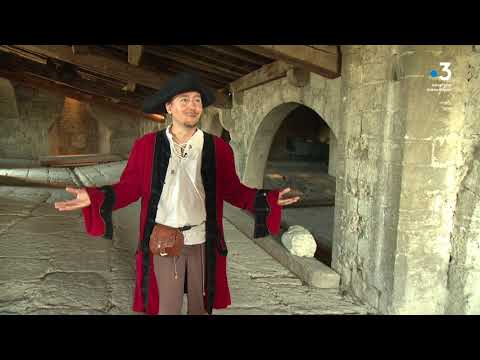 Three ways into Crest: the tower, the town and the Drôme valley
 The municipality’s own film takes a broader angle, naming nature, history, culture and local know-how, and moving from the old streets toward the tower panorama. Because it comes from the town itself, it is a practical orientation piece: it helps visitors see that Crest is a lived-in centre as well as a medieval silhouette.
 Courants d’Aire offers a longer summer visit through Crest and the Drôme valley. Its slow, exploratory framing suits viewers who want to sense the scale of a walk between streets, viewpoints and the tower, rather than only collect monument facts. Treat it as an independent travel portrait and use current municipal information for opening times.