A hill town above the Sacco Valley
Castro dei Volsci rises on a ridge in the Province of Frosinone, in southern Lazio. From its old lanes and lookout points, the land opens toward the Sacco Valley and the lower hills of Ciociaria; that outlook explains the local nickname, the Balcony of Ciociaria. The Comune covers more ground than the walled centre, with wooded slopes, rural settlements and the mountain territory of the Monti Ausoni. ISTAT counted 4,353 residents in the whole municipality on 31 December 2024. This is a dated municipal total, not a count of people living only in the historic core.
Arriving through Porta della Valle, visitors enter a close-grained medieval centre of narrow, winding streets, stone façades, arches and small squares. The settlement rewards walking and pauses: a steep turn may open onto the valley, while another passage leads toward the remains of the Rocca di San Pietro. The place is not simply a balcony for photographs. Its archaeology, religious buildings, local craft and a difficult wartime memory give the compact town a wider story than its panorama suggests.
Ancient remains, careful claims
The surrounding territory preserves evidence of human activity across a long span of time. The Civic Archaeological Museum holds about 700 objects in eight thematic sections and a lapidary, covering the story of the area from prehistory to the early Middle Ages. Many finds come from Casale Madonna del Piano, where archaeologists have documented an imperial villa, a bath complex, an early Christian basilica and an early medieval burial ground. These remains make the lower landscape an important companion to the hilltop town: the current centre is not the only place where its history can be read.
Castro’s name invites an easy story about the Volsci, the ancient people whose name the modern town bears. The evidence needs more care. The Comune describes the walls at Montenero and the area’s ancient settlement, but another municipal account explicitly says that no archaeological documentation establishes a Volscian presence in this territory. The masonry exists; its precise builders and ethnic identity are not settled by the name alone. In the same way, Roman-period remains and the route of the Via Latina through the wider territory show the importance of the valley, but do not prove that the present walled town began as a Roman foundation.
The municipal archaeological account interprets the move from the valley settlement at Casale to the fortified ridge as part of early medieval incastellamento, around the ninth to eleventh centuries. That is a scholarly reading of the archaeological sequence rather than a single, uncontested foundation year. It helps explain the town’s position: as insecurity and political change reshaped settlement, a defensible hilltop became a stronger home than the open valley.
Gates, churches and the Rocca
Several gateways still organize the walk. Porta della Valle is the most familiar entrance, while Porta di Ferro and Porta dell’Ulivo served the outer circuit; Porta dell’Orologio leads into a more internal ring. The Comune traces this older defensive line through the circular course of modern Via Civita. Within it, Santa Maria stands near the valley gate, and the church of Sant’Oliva crowns the upper part of the town beside the Rocca. The small scale lets a visitor move between religious, civic and defensive landmarks without a long transfer.
San Nicola, a short distance from the centre, offers a different encounter: the regional tourism account describes medieval frescoes with scenes from the Old and New Testaments. The frescoes matter because they preserve a visual layer of the community’s religious life, not because the church is a decorative backdrop. Opening access to churches and archaeological areas can vary, so ask locally before building a fixed schedule around them.
The Rocca also holds the Monument to the Mamma Ciociara, inaugurated in 1964. It commemorates women subjected to wartime sexual violence and the wider civilian suffering of the Second World War. The memorial faces the landscape that frames the town, but its meaning is not scenic: it marks loss, violence and the memory kept by local families. Regional tourism material recounts a local story of a mother who defended her daughters; it is best understood as part of the memorial tradition, not as a documented biography of a named individual.
Nino Manfredi and a living local identity
Castro dei Volsci is the birthplace of Nino Manfredi, born here on 22 March 1921. The Torre dell’Orologio now houses a permanent exhibition in the Nino Manfredi cultural centre. The display creates a link between the actor’s national career and the village he came from, while a short visit to the tower also places that cultural story inside the old town’s defensive fabric. The Comune’s archive includes a recording of a special day in 2014 dedicated to Manfredi, when the exhibition opened and an outdoor screening took place; that video documents one event, not a current calendar.
Craft and food add another register to the visit. The Botteghe della Regina Camilla are described as a Sunday circuit of artisan workshops where makers show work and techniques. Regional tourism sources point to local sausage, cheeses, olive oil, truffles and fettuccine known locally as lakena. These products express a rural culture still visible in the landscape and on the table. They should not be mistaken for a measure of current employment: the published visitor sources describe traditions and experiences, not the present-day balance of jobs by sector. Check which workshops and food businesses are open on your dates.
From the museum to the hills
The archaeological museum is one of the clearest visitor services in town. The Comune’s page lists opening hours and ticket prices, but the Lazio museum register says hours should be requested. Call the museum before travelling to confirm access, guided visits and whether the nearby archaeological site is open. That small step matters especially if you are planning to see both the hilltop centre and Casale Madonna del Piano on the same day.
The municipality also belongs to the Parco Naturale Regionale dei Monti Ausoni e Lago di Fondi. The terrain shifts from the Sacco’s lower valley to wooded and limestone uplands, including Monte Calvilli. For walkers, the Cammino della Regina Camilla is a much larger itinerary: the regional visitor service describes a 185-kilometre loop through 12 villages of the Valle dell’Amaseno, inaugurated in 2023 and beginning and ending in Priverno. Its name comes from Virgil’s literary Camilla; that literary reference does not establish a historical queen in Castro. Treat it as a long-distance route and consult the route operator for stages, marking and current conditions.
Getting there and exploring nearby
The most practical public-transport option is the regional train to Castro-Pofi-Vallecorsa, followed by the bus that Trenitalia sells as a connection to Castro dei Volsci town. The bus leaves from the station forecourt. Check the combined journey for your travel date, including the return, because train and bus are separate services and departures can change. RFI lists two passenger tracks at the station but no assistance service for travellers with disabilities or reduced mobility; contact the carrier in advance if you need boarding assistance. By road, the Comune lists Frosinone 23 kilometres away, making it the nearest larger service centre.
Castro works well as a slower stop within a Ciociaria itinerary that also reaches Frosinone, Ceccano, Ferentino, Veroli or Anagni. The old centre, the archaeological museum and the valley landscapes make different kinds of visit, so allow more time than a quick viewpoint stop if the museum is open. At the end of the walk, return to the belvedere at a different hour: the view is part of the town’s identity, but the stories in its streets are what make the place worth staying for.
 Castro dei Volsci in three perspectives: village, valley and Nino Manfredi
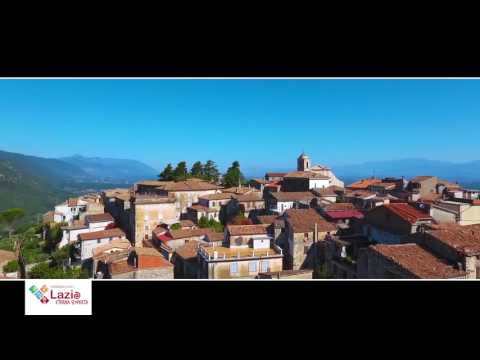 Visit Lazio’s short destination film offers a concise regional tourism introduction to Castro dei Volsci. It is useful for viewers deciding whether to add the hilltop village to a Lazio itinerary and for seeing how the regional tourism office frames its appeal. As a promotional overview, it cannot replace detailed historical research or current transport and opening-time checks, but it gives a quick point of entry before exploring the town’s gates, viewpoints and museum information.
 SettebelloRoad’s record of the 21 June 2014 Nino Manfredi day connects the actor’s birthplace with a specific civic act of remembrance. The accompanying description identifies the opening of a permanent exhibition and an outdoor screening of Per grazia ricevuta among the day’s events. It is an archival record of that occasion, not a current programme: use it to understand the town’s cultural connection to Manfredi, then verify today’s exhibition access with the municipality.