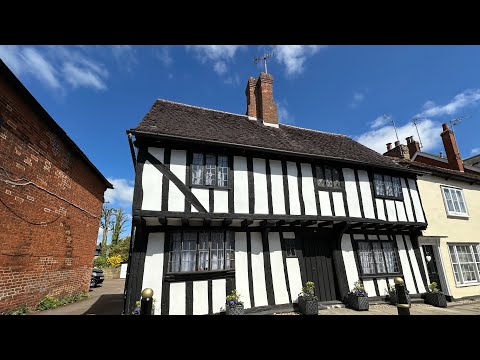
Buntingford grew along the old London-to-York road in the valley of the River Rib. Its High Street still has the scale of a small market town, with former coaching inns, independent businesses and buildings that reveal several centuries of adaptation. Church Street leads away from the traffic towards the river crossing, while footpaths connect the centre with surrounding Hertfordshire countryside. For a visit or a possible move, the town offers both a recognisable historic core and a much larger residential community than its old street alone suggests.
| Residents | 7,989 |
|---|---|
| Area counted | Buntingford civil parish — civil parish census area |
From a ford to a market town
A document of 1185 records Buntas Ford, and Henry III granted a weekly market charter to the manor of Corneybury in 1253. The road provided a setting for trade, while the river crossing helped concentrate movement through the valley. The older settlement of Layston stood on higher ground to the east.
The Roman origin of Ermine Street does not mean that every later place along it was founded as a Roman town. Buntingford’s securely documented development is medieval and later. Its relationship with Layston, the ford and the highway explains the different historic sites more usefully than attaching one ancient foundation date to the whole modern parish.
Reading the High Street
Coaching brought particular importance in the early eighteenth century, when travellers needed horses, meals and overnight accommodation on the long journey north. Several old inns have since become houses or shops. Look at entrances, the depth of plots and changes in frontage: their present use does not always reveal the work they once did.
The town’s historic overview points out a rare one-handed turret clock associated with the former Angel Inn. Around Church Street and the River Rib, the old lock-up, known as the Cage, and the ford provide a different view of everyday life. A slow circuit between the High Street and river is more rewarding than treating the town only as a convenient stop on the A10.
Layston’s church has a new life
St Bartholomew’s, the former parish church of Layston, survives outside the busiest part of town. Older descriptions call it derelict or describe a conversion still under way. The restoration project now records that the work is complete and the building is a private residence, with living accommodation within the historic shell.
That change matters when planning a visit: it is not an ordinary church open for tourists to wander through. Appreciate views available from public approaches and observe the boundary between the surrounding historic landscape and a family home. St Peter’s in the High Street has a separate role in the present community; the town council identifies its responsibility for the graveyard and remembrance grounds at Layston.
Country walks and life beyond the frontage
Published local routes link Buntingford with the surrounding lanes and villages, including Aspenden. The town council’s walking leaflet gives proper directions and helps turn a short look at the centre into a longer outing. Field paths can be muddy, so choose the route for the season and keep to the public right of way.
The historic core occupies only a small part of today’s parish. At the 2021 census, Buntingford civil parish counted 7,989 usual residents. Anyone considering moving here should explore residential areas as well as the old centre, and make an ordinary weekday journey to the facilities they expect to use. The town’s older buildings and its newer neighbourhoods represent different parts of the same place.
Where to eat and stay
The Sword Inn Hand is a dining and overnight option in Westmill, about a mile and a half south of Buntingford, rather than in the High Street itself. The operator currently offers four individually named en-suite rooms, a more extensive choice than the two rooms still mentioned in an older council directory entry. Its menus change with the seasons and include separate Sunday arrangements.
The inn’s own information distinguishes weekday in-room breakfast provisions from the cooked breakfast offered after Friday and Saturday stays. That is useful detail for an early departure or a longer visit. Book the room and meal together if needed, and allow for the journey back from Buntingford rather than assuming that a Buntingford postal address places an accommodation property within the centre.
Connections with London and nearby towns
Buntingford has no operating passenger railway station. Current Intalink information lists service 331 between the town and Hertford via places including Westmill, Puckeridge and Ware. Hertford and Ware provide onward rail options towards London. The bus trip and rail trip need to be planned as separate stages, particularly for an evening return.
The A10 is the main road corridor for journeys towards Cambridge or the London area. Compare routes using the actual address and travel time required for work or study: a town outside a city can still involve a substantial daily journey. A trial trip at the hour you expect to travel is more informative than an optimistic off-peak driving estimate.
Sources
- Layston restoration project: completed conversion and private residential use
- Historic England: former St Bartholomew’s church
- The Sword Inn Hand: current rooms, food and breakfast arrangements in Westmill
- Intalink: current 331 service between Buntingford, Ware and Hertford
- Hundred Parishes Society: original local history, buildings and parish extent
- Office for National Statistics via Nomis: Census 2021 usual residents, civil parishes