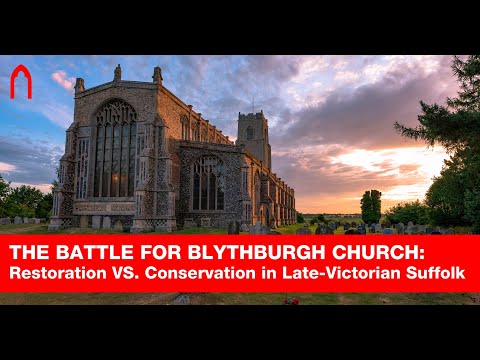
Blythburgh’s great church rises above the River Blyth beside the A12, a landmark whose scale seems surprising in such a small village. The surrounding tidal water, reedbeds and open countryside are as important to its character as the buildings. A visit can combine the church, a riverside walk and a meal at the White Hart, with Southwold and Halesworth providing nearby town connections. The settlement’s present quietness conceals a much more influential role in early medieval and later Suffolk.
| Residents | 336 |
|---|---|
| Area counted | Blythburgh civil parish — civil parish census area |
An early centre beside a river crossing
Blythburgh has Anglo-Saxon origins and was an important religious and administrative centre before the Norman Conquest. A Christian presence is indicated by early material evidence, including an eighth-century writing tablet associated with the place. Later traditions about royal burials and the exact role of an early church should be distinguished from what survives in the present building.
The settlement developed at a low crossing of the Blyth within an agricultural landscape. Its medieval importance included a market and local authority, but calling it a major seaport is less secure: trade attributed to Blythburgh can be confused with activity closer to the sea at Walberswick. The winding tidal river, crossing and neighbouring settlements are best understood together.
Holy Trinity and the angels above
Holy Trinity is affectionately called the Cathedral of the Marshes, a description of its presence in the landscape rather than its formal status as a cathedral. Much of the great church belongs to a fifteenth-century rebuilding, with an earlier tower retained. Inside, the timber roof and carved angels provide the most memorable features, alongside the light admitted through the upper windows.
Use the church’s visitor guide to look beyond the first impression of scale. Woodwork, seating and surviving details reveal the building’s use and later changes. The church remains an active place of worship and is also used for concerts and exhibitions. Its own website welcomes visitors during the day, while services and events provide different ways to experience the space and its acoustics.
Damage, decline and the conservation debate
The Reformation changed the nearby priory and the parish church. Removal of images and glass, later iconoclasm and prolonged neglect altered what medieval worshippers would have known. A destructive village fire in 1676 contributed to the loss of older houses. The present settlement therefore includes relatively little domestic fabric from before that event.
By the nineteenth century, Holy Trinity had deteriorated severely. Its repair prompted a national argument about restoration and preservation, involving the circle of William Morris and the Society for the Protection of Ancient Buildings. That debate helps explain why conservation itself is part of Blythburgh’s story. The building is valuable for its surviving material and history of care, rather than as a complete recreation of a single medieval moment.
A storm, a legend and the riverside
The Black Shuck story is associated with a violent storm at the church in 1577. Its supernatural dog belongs to folklore, not to a verified account of an animal attacking the congregation. The distinction allows the legend to be enjoyed without turning it into an invented historical event.
Outside, the estuary and former railway approaches provide another way to appreciate the setting. Look back towards the church from the water rather than only from the main road. Follow public paths and current access notices; marsh, mudflat and private grazing land are not interchangeable walking surfaces. Birdwatching and changing light on the tidal river can make a modest walk rewarding without requiring a full coastal expedition.
Staying at the White Hart
The White Hart Inn stands on London Road and offers food as well as four en-suite bedrooms. The accommodation is in a separate courtyard area, with estuary views described in the operator’s own information. It is an option within Blythburgh itself, useful for enjoying the river landscape before or after the busiest passing traffic.
Check the current food service and room arrangements when booking, especially if arriving late or travelling with a dog. Staying beside a trunk-road village differs from a remote coastal cottage: the road brings access but remains part of the setting. For an evening out elsewhere, arrange the return rather than assuming that a daytime bus connection continues late into the night.
Halesworth, Southwold and the scale of the parish
The local Blyth Valley visitor information identifies route 99A between Southwold and Halesworth, serving Blythburgh and neighbouring villages. Halesworth has an operating railway station for onward travel along the East Suffolk line, making it a useful gateway from Ipswich and the wider rail network. Check the current operator timetable and stop for the intended journey.
The 2021 census counted 336 usual residents in Blythburgh civil parish, including its dispersed countryside. This small resident community sits within a wider visitor landscape of coast, river and nearby towns. A longer stay can give the church and estuary their own day, then use another for Southwold or Halesworth. That leaves time to see Blythburgh as a place with a continuing community, rather than only a landmark noticed from the A12.
Sources
- Local historian Alan Mackley: Blythburgh’s changing role
- Suffolk Historic Churches Trust: Holy Trinity visitor guide
- Holy Trinity: visits, worship, music and events
- Local research: the village angel and riverside setting
- Blyth Valley Experience: bus and rail connections
- Office for National Statistics via Nomis: Census 2021 usual residents, civil parishes