Vouvant’s medieval outline comes from its geography as much as its walls. The old town sits on a bend of the Mère, which wraps around it on three sides, while the Mervent-Vouvant forest begins nearby. From the public garden above the western gate, the view connects the fortified settlement, river valley and wooded slopes. This is a small living commune, not an open-air museum: its church remains in use, local shops serve residents, and much of the visit can be made on foot from Place du Bail.
The documentary story begins in a Latin charter dated around 1016–1019. The municipal historical account says William the Great, Count of Poitiers and Duke of Aquitaine, recorded a fortified place and a monastic complex at Vouvant, with the monk Théodelin of Maillezais commissioned to establish the church and monastery. The exact location of that first stronghold is uncertain; the municipality lists several possible sites. The present Mélusine Tower belongs to a later Lusignan castle: its masonry is dated to the late twelfth or first quarter of the thirteenth century. The fairy who gives it its popular name belongs to medieval literature and local legend. Jean d’Arras and Coudrette wrote versions of the Mélusine story around the end of the fourteenth and start of the fifteenth centuries; the tale that she built Vouvant’s castle in a single night is a story, not an archaeological date.
A keep, a church and gateways into the past
The round Mélusine Tower is the most immediate landmark at Place du Bail. It rises 36 metres above the former dry moat and is the only complete surviving remnant of the Lusignan castle. When it is open, the climb reaches a platform with a 360-degree view over the walled town and forest. Access is seasonal and the key is obtained through the tourist office, so check the current opening arrangements before planning around the ascent. The castle was gradually abandoned and dismantled during the eighteenth century; lower remnants of the Tour des Gardes and flattened wall foundations help explain why the tower stands alone today.
Notre-Dame church gives the town a different historical scale. The municipality dates its construction to the early eleventh century and notes later changes in the twelfth, fifteenth and seventeenth centuries, followed by substantial restoration and partial rebuilding in the late nineteenth century. The surviving Théodelin nave is the only preserved part of the eleventh-century priory church. It now also serves as an exhibition space, linking an old religious building with the contemporary artists who work in the village. The church was placed on France’s first list of protected historic monuments in 1840.
Walk to the Poterne, the only medieval town gate still standing, then follow the surviving walls and paths above the Mère. The old bridge, sometimes called the Roman bridge although the surviving medieval fabric is dated to the thirteenth through fifteenth centuries, once served the now-lost Porte aux Moines. A second bridge was built in the nineteenth century when the new road was cut through the fortifications. Farther out, the Baguenard viaduct recalls a more recent transport history: the railway bridge was built for the Fontenay-le-Comte–Breuil-Barret line, opened in 1890 and closed in 1955. These layers make a rewarding walk for visitors interested in how a settlement changed, rather than only in a single picturesque view.
Forest paths, artists and the services of a small town
Vouvant is a useful starting point for the Mervent-Vouvant forest, which the municipality describes as the largest woodland in Vendée, covering a little over 5,500 hectares. Several marked walks begin at Place du Bail. The easy Remparts circuit covers about 3.1 kilometres in roughly an hour; the more demanding Gasse du Bois loop is 16.1 kilometres and takes about five hours, passing the Mère, Pierre-Brune, the Verreries valley and the Poterne. Check trail conditions and the route sheet locally, especially after rain. The forest is a destination in its own right, but the paths also show the relationship between the walled town, river, former mills and surrounding countryside.
From April to October, the Vouvant Village de Peintres programme opens around ten studios, galleries and creator shops across the village, with exhibitions in the Théodelin nave. The municipal directory also lists everyday services including a grocery, bakery, health practitioners and pharmacy, alongside restaurants, accommodation and small businesses. INSEE counted 829 municipal residents in 2023 for the whole commune. Its business data recorded 92 active non-agricultural establishments in 2023, including 22 in wholesale and retail trade, transport, accommodation and food service; this is a broad sector category, not a measure of tourism alone. These figures help place the visitor economy in a real rural community.
Getting there and planning a visit
Fontenay-le-Comte is the nearest useful regional hub. Aléop lists coach lines 15 from La Roche-sur-Yon, 16 from Niort and 17 from La Rochelle to Fontenay-le-Comte. The current published Aléop stop-and-schedule dataset does not list a stop in Vouvant, so do not assume a direct bus connection; arrange the final road leg separately. The local directory lists taxi and ambulance services. For cyclists, the official Vendée Vélo itinerary from Fontenay-le-Comte to Vouvant is 18 kilometres, with about 11 kilometres on a greenway and seven on shared roads. The village’s lanes and historic surfaces may be difficult for some visitors; ask the tourist office about access to the tower, church and exhibition spaces. Opening hours and transport schedules change, so verify them before setting out.
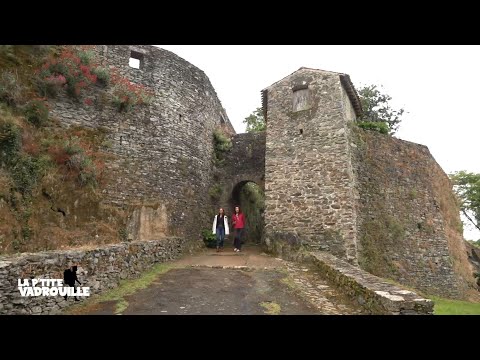 Vouvant en vidéo : promenade locale, histoire et paysages de Vendée
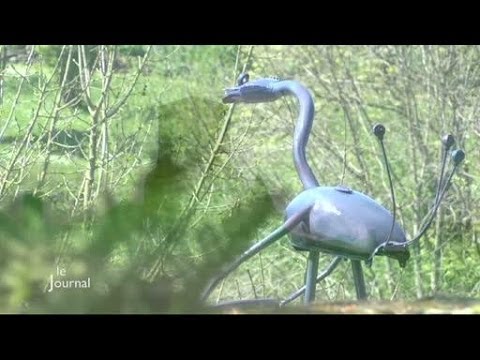 This 2014 TV Vendée clip introduced Vouvant as the Pays de la Loire representative in the French programme Le village préféré des Français. Its purpose is a concise, celebratory presentation of the town for a national television audience. That makes it a useful record of how Vouvant framed its medieval identity at the time, rather than a current visitor guide. The clip is much older than the 2025 walk, so opening arrangements, businesses and events should be checked separately.
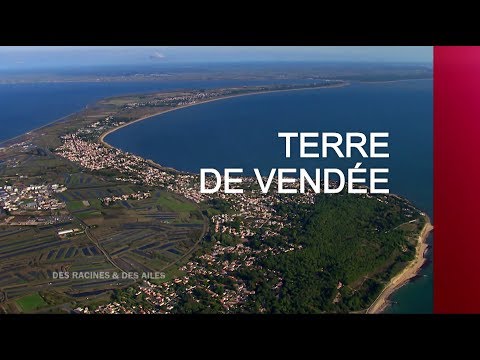 The France Télévisions programme is a full regional episode about the heritage of Vendée, not a film devoted solely to Vouvant. It broadens the frame around the village and helps place its fortified centre within the department’s wider landscapes and history. Because the scope is regional, viewers looking specifically for the Mélusine Tower or the church should treat it as context and use the dedicated local material for detailed access information. The episode was published in 2018; it cannot confirm present-day timetables or seasonal services.