Tauberbischofsheim is a small regional capital in northern Baden-Württemberg, set beside the Tauber River amid vineyards, wooded slopes and open farmland. Its historic centre is compact enough for a walking visit, but the municipality also includes six villages whose landscapes stretch along the valley and into side valleys. The city’s data page reports 13,779 residents for the whole municipality on 31 December 2024. Today it has an unusual double identity: a medieval administrative town and an internationally recognised centre for fencing.
Lioba, Mainz and the town’s documented beginnings
The municipal chronology places a women’s monastery founded by Boniface at Bischofsheim around 735, with his relative Lioba as its first abbess. The earliest written reference to the place name is later: “Biscofesheim” appears in 836 in a life of Lioba. These two dates describe different kinds of evidence, and the earlier religious tradition should not be confused with the first surviving written mention. In the thirteenth century the settlement passed to the archbishopric of Mainz; the city records the grant of town rights between 1237 and 1245. A castle and fortifications followed, and the old town still preserves towers, wall remnants and buildings from several periods.
From the market square to the castle
Begin at the Marktplatz and the nineteenth-century town hall, then follow the old streets toward the Kurmainzisches Schloss. The complex houses the Tauberfränkisches Landschaftsmuseum, whose collections put local history and landscape in context. Nearby, the Türmersturm and remains of the defences recall the fortified town; the Peterskapelle, dated by the city to 1180, is identified as its oldest church building. A guided walk is a good way to connect these separate landmarks, especially if it includes the tower viewpoint. The town’s visitor information is located in the Rathaus, where current tours and museum arrangements can be checked.
A sporting identity rooted in the town
Fencing is part of everyday civic identity here, not a decorative slogan. The fencing club began in 1954, and the city’s official history traces its rise through national and Olympic-level training. In Seoul in 1988, three women from the club—Anja Fichtel, Sabine Bau and Zita Funkenhauser—won Olympic medals at the same Games. Since 1 May 2026 the city has officially used the additional designation “Fechterstadt”. The fencing centre and its museum add a distinctive stop to a town visit, although access to training spaces and exhibitions should be confirmed in advance.
River routes, villages and regional connections
Walking paths follow the Tauber and climb into vineyard and woodland scenery; the established “Liebliches Taubertal” cycling route links the town with neighbouring communities. The six incorporated districts—Dienstadt, Distelhausen, Dittigheim, Dittwar, Hochhausen and Impfingen—offer a wider rural itinerary, including the brewery in Distelhausen. Tauberbischofsheim is served by the Tauberbahn between Wertheim and Crailsheim; at Lauda it connects with the Frankenbahn toward Stuttgart and Würzburg. The municipality also lists regional buses, a local bus and a call-taxi service. Check current train, bus, museum and guided-tour schedules before travelling.
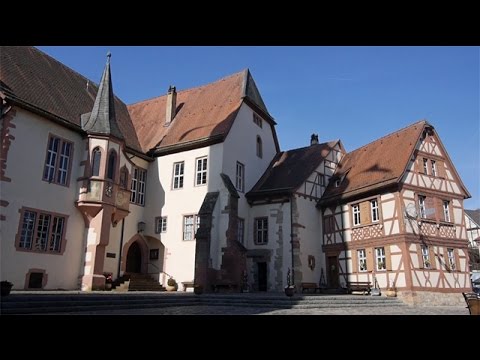 Tauberbischofsheim: a walk from the river into the old town