Seehof is a small municipality on the western shore of the Schweriner Außensee, where village life and a popular lakeside holiday setting meet within easy reach of Schwerin. The municipality comprises Seehof and Hundorf. On 30 September 2026 it had 934 residents across 4.35 square kilometres, according to the federal and state statistics portal. Its appeal is not a grand historic centre: it is the close relationship between settlement, water and woodland, and the chance to pair a quiet lakeside stay with the museums, streets and architecture of the nearby state capital.
Two names, different historical records
+The landscape was used long before the modern municipality took shape. The local authority says flint finds from the Middle Stone Age document human activity in the area that is now Seehof and Hundorf. Such finds are evidence of prehistoric presence, not proof that a village existed continuously here from that period. The documentary history is much later and uneven: the district of Hundorf is recorded as a settlement in a document dated 9 September 1171, while the municipal account dates Seehof’s naming certificate to 17 November 1883. Those dates describe different places and kinds of records; neither establishes a single founding date for today’s municipality.
+That distinction matters in a place whose identity is shared between two settlements. Hundorf carries the older written record, while Seehof’s present name is tied by the municipality to a much later document. The local authority also says residential areas expanded after 1990. The resulting community is still small, but it is not merely a seasonal resort: a nursery, a care home, volunteer fire brigade and community hall are part of everyday village life. The hall hosts cultural and community events, and its meeting room can be hired for family gatherings.
A working lakeshore and a visitor economy
+The Schweriner Außensee gives Seehof its defining public space. A shoreline walking path follows the water, and the municipality identifies both a lakeside bathing facility and a large camping area. The state’s bathing-water register lists the Seehof bathing site on the Schweriner See, so swimmers can check current monitoring information before setting out. Access arrangements and seasonal opening can differ between the public bathing area and facilities reserved for campsite guests.
+The Ferienpark Seehof is a substantial part of the local visitor offer: its operator describes an 18-hectare wooded site by the lake, with camping pitches, bathing, waterside recreation and family facilities. Its current visitor information includes a beach, accessible play equipment, indoor activities and bicycle hire. The operator’s own chronology shows how the site developed from camping toward a broader holiday park, adding a creative workshop, indoor play space and water-sport services over time. Those facilities make Seehof a practical base for people who want both a lake holiday and day trips, though individual services and opening periods should be confirmed directly before travel.
+Tourism is clearly visible here, but the available local sources do not give a current employment breakdown for the municipality. The wider Amt Lützow-Lübstorf describes agriculture as well as tourism around Schwerin’s lakes as part of its economic setting. In Seehof itself, the campsite and lake recreation are the best-documented visitor-facing activities; the surrounding countryside and adjoining Schwerin also shape the village’s residential character.
From the water to Schwerin and the wider lake district
+Seehof works well as a slow outdoor stop rather than a checklist of monuments. Walk the shore, spend time at the bathing area when it is open, or use the holiday park as a starting point for cycling and water-based activities. The municipal page notes cycle connections south toward Schwerin and north toward the Baltic coast, while the campsite recommends rides around the Schweriner See and into the capital. Route surfaces, access through protected areas and seasonal conditions vary, so check a current map and local notices before planning a long ride.
+For a car-free arrival, the most straightforward verified connection is Schwerin’s city-bus line 8. The operator’s current route material shows Seehof and Hundorf on the line between Schwerin Hauptbahnhof and Lübstorf; from the main station, the city centre and its cultural attractions are reachable on the same network. A 2018 municipal planning document places Seehof about eight kilometres from Schwerin, but that is a geographic reference, not a promise of journey time. Check the live timetable for the day of travel, especially at weekends and during service changes. By car, the municipal planning documents identify Kreisstraße 42 and the connection toward the B 104.
+Visitors can combine a lake walk or swim with an afternoon in Schwerin, then return to the quieter west shore. Seehof’s value lies in that contrast: a compact, inhabited place with prehistoric traces and a medieval-recorded neighbour, set beside a large lake and close to a regional city. It rewards time outdoors and makes an easy base for exploring the Schweriner Seenland.
 Seehof am Schweriner Außensee: vom Wasserblick bis zum Campingurlaub
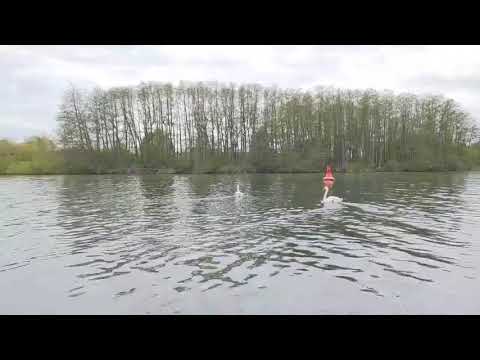
 This older drone film is unusually well identified: its description gives a Seehof location and filming coordinates beside the Schweriner Außensee. The elevated view can help a visitor understand the lakeside setting and the position of the Ferienpark. It is a 2017 recording, so vegetation, facilities and access may have changed; treat it as a landscape view, not a reliable picture of today's services.
 The go4SUP creators document a personal camping and stand-up-paddling stop at the Ferienpark Seehof near Schwerin. Its recent date makes it a useful impression of the place as a holiday base, while its first-person travel format is not an official description or a promise that every service remains available. Pair it with the operator's current page for bookings, dates and facilities.