Sarrant makes a strong first impression at its medieval gate, but the village’s present-day identity extends well beyond its stone enclosure. The old centre gathers around Saint-Vincent church in a compact, many-sided plan; just outside it, a cultural network of illustrators, printmakers, a bookshop-café and a digital museum has given this small commune a new reason to draw visitors. The result is a place where a slow walk through a historic settlement can lead directly into contemporary creative work.
The commune counted 358 residents in the 2023 census, the latest population figure published by INSEE for Sarrant. That figure covers the entire municipality, not only the walled centre. INSEE also records 70 jobs located in the commune in 2023 and nine employer establishments at the end of 2024. In a community this small, those numbers should be read as a snapshot rather than a full portrait of livelihoods; they nevertheless show that Sarrant is a lived-in rural place, not an open-air monument. Fields, small roads and working countryside remain part of the experience around the historic core.
A many-sided village in the Lomagne countryside
Sarrant stands in the Gers, in the Lomagne gasconne, on the left bank of the Sarrampion stream. The regional heritage inventory describes the historic settlement as a ten-sided polygon with the church at its centre and two concentric rings of houses around it. The familiar description of a “circular village” captures the way the lanes curl inward, but the measured form is polygonal rather than a perfect circle. Limestone walls, timber-framed upper floors and tiled roofs give the enclosure its changing textures; some buildings sit against or incorporate parts of the old defensive line.
That arrangement rewards a visit on foot. Enter through the gate tower, follow the lanes around the church, then look back at how the houses form a compact ring rather than a single straight street. The municipal heritage page marks several points of interest—including the gate, Saint-Vincent, the school, a washhouse, the cemetery chapel and a garden—with QR codes for an audio-guided walk. A short visit can stay within the centre; those with more time can continue into the surrounding countryside.
What the historical record can—and cannot—say
The regional inventory treats Sarrant as a fortified ecclesiastical settlement reorganised in the later Middle Ages. It notes that the place-name Sarrali, written on the Peutinger Table, has been identified in the vicinity of modern Sarrant. That is a scholarly identification, not proof that the present town was founded by Rome or that an ancient settlement occupied precisely the same site. The first written mention of Saint-Vincent church dates to 1156. The settlement probably began to cluster around the church from the middle of the twelfth century.
The village’s current layout probably took shape in the third quarter of the thirteenth century, around 1265, when a customary charter is said to have been granted. The surviving copy was compiled in the seventeenth century and contains inconsistencies in the names of the king and the bishop; the heritage inventory therefore treats the charter cautiously. The evidence for fortification is stronger in the surviving wall and in the shape of the settlement. The gate tower came slightly later, in the first half of the fourteenth century. Several houses preserve later medieval details, although most visible façades belong to the early modern period.
Saint-Vincent stands at the centre of this history. Sarcophagi found near the church during twentieth-century works are thought to date from the early Middle Ages and indicate a burial ground; they do not establish a Roman foundation. The church was enlarged in the sixteenth century. Its Renaissance doorway, made in the 1530s, was later moved to its current position, and a dated stone records work in 1568. The west tower is a nineteenth-century addition. These layered changes make the church more than a scenic centrepiece: it records how the village kept adapting around its religious and defensive heart.
In the second half of the nineteenth century, the ditches were filled, a tree-lined boulevard was laid out, a school was built and another western entrance opened. The village was not frozen in the Middle Ages; its present outline combines medieval fortification, early modern houses and nineteenth-century civic improvements. Sarrant’s gate tower is protected as a historic monument, and the village belongs to the national network of Les Plus Beaux Villages de France.
From an old enclosure to a village of illustration
Sarrant’s cultural project is unusually rooted in local collaboration. In 2014, the LIRES association and the Gers departmental media library launched an illustration festival. The initiative developed into “Sarrant, Village de l’Illustration®,” bringing together the Maison de l’Illustration, the Ateliers Charrette, the Des Livres et Vous bookshop-tartinerie, the municipal media library and the Micro-Folie digital museum. Illustrated street signs created by eleven illustrators carry the idea out of exhibition rooms and into the public space.
The Ateliers Charrette work with traditional printmaking forms such as screen printing, engraving and typography. Artists also maintain studios in the village, so the creative life is not limited to a single annual event. The Maison de l’Illustration hosts exhibitions and activities; its 2026 visitor listing gives free weekend opening on Saturdays and Sundays from 3 to 6 p.m., but dates and hours should be checked before travelling. At Des Livres et Vous, shelves of books share space with a café serving sweet and savoury tartines and local products. The tourism office lists around 20,000 book references and a changing programme of author meetings, workshops and events. Seasonal hours vary.
The Micro-Folie offers another kind of cultural visit: a free digital museum where high-definition collections from national and international museums can be explored, with virtual reality, guided sessions and workshops on the programme. It gives visitors a reason to stay when the weather turns and provides a contemporary complement to the village’s older fabric. Check the municipality’s current monthly programme; the virtual-reality headsets are reserved for visitors aged twelve and over.
Walk beyond the gate
The official Sentier des Pigeonniers starts beneath the plane trees and makes a 7.7-kilometre loop of about two hours, graded easy by Gers Tourism. The route reaches four dovecotes, a washhouse, views toward the countryside and the Gimone valley. Its maximum listed elevation is 185 metres, and the tourism page notes parking, public toilets and a picnic area. One dovecote near the end stands on private property: it can be seen from the road, but visitors should stay outside the property. Check the route map and local conditions before setting out, especially after rain.
The trail also gives a sense of how the settlement relates to its agricultural hinterland. Rather than treating the landscape as a decorative backdrop, it passes through the roads and fields that connect Sarrant with neighbouring communities. The broader Lomagne is best explored at a measured pace: pair the village with nearby Mauvezin or Solomiac, and leave time for the small roads rather than planning the day around a hurried photo stop.
Getting there and planning a useful visit
Sarrant is easiest to reach by car, with the official walking route approaching the village via the D205. There is no liO bus stop in the historic centre. The current regional line 933 links Auch and Montauban and calls at nearby Mauvezin and Solomiac, so a bus journey still needs a separately arranged last leg. The municipality lists a community on-demand transport service on predefined routes: visitors should call the operator on 05 62 64 39 81 to ask whether their journey is possible and reserve by noon on the preceding day. Do not assume that this service covers every visitor itinerary. Check liO timetables and the operator’s conditions before setting out.
For a first visit, allow time to enter through the gate, circle the church and read the building fronts before choosing between the cultural venues and the countryside loop. A half-day can combine the centre with one exhibition or the Micro-Folie; a full day allows the dovecote trail and a longer pause at the bookshop-café. Opening days, events and transport timetables can change, so confirm them in advance. Sarrant is small enough to cross quickly, but its story becomes clearer when the medieval plan, the working countryside and the village’s present creative life are seen together.
 Sarrant on screen: medieval lanes, illustration and a village from above
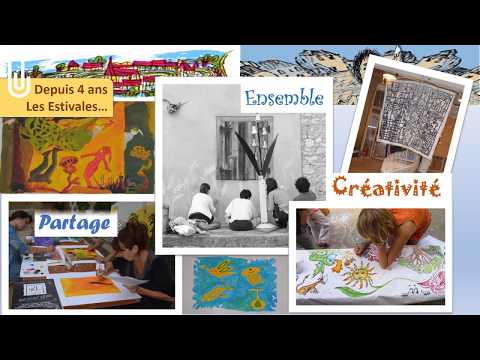 This film focuses on the Maison de l’Illustration, the cultural initiative that helped give Sarrant a contemporary identity beyond its medieval fabric. It is useful context for understanding why exhibitions, printmaking workshops and artists’ studios became part of the village’s public life. The video dates from 2018 and is tied to the project’s development at that time, so it should not be read as a current programme or a promise that every activity shown remains available. Check the municipality’s latest information for today’s venues and hours.
 LAMAIRE Laurent’s 4K drone film offers a broad view of Sarrant’s built cluster and its rural setting. Seen from above, the old centre reads as a compact, many-sided group of roofs rather than a single street; that perspective helps explain why the church and enclosure are so closely connected. The aerial view is valuable for orientation and landscape, while the regional heritage inventory remains the source for dates and architectural interpretation. The footage was published in 2021 and cannot indicate current access, transport or opening times.