Queralbs: Romanesque heritage and the gateway to the Vall de Núria
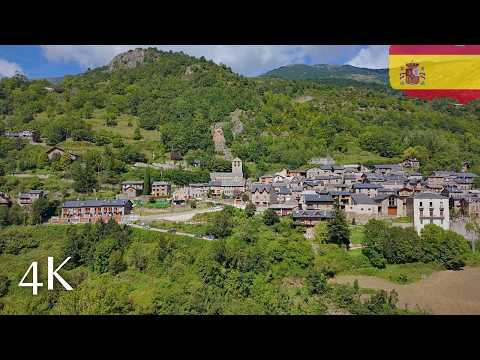
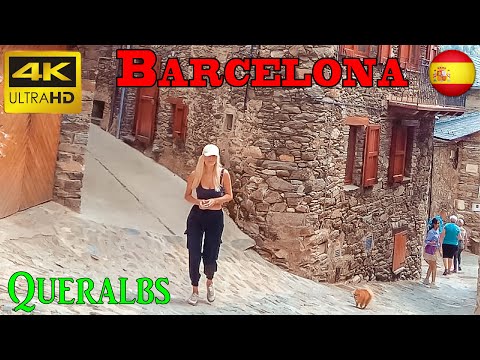
Queralbs is a mountain village in the Ripollès district, within the Vall de Ribes, where the Freser and Núria rivers descend between peaks such as Puigmal, Balandrau and Torreneules. Stone houses, slate roofs and narrow lanes make up a centre that is best explored on foot. The municipality extends much farther than that centre: it includes Serrat, Vilamanya, Fustanyà and the Vall de Núria. According to Idescat, the municipality had 202 residents on 1 January 2025, covered 93.47 km² and had a reference altitude of 1,236 metres. The village centre itself had 151 residents in the same statistics. These two population figures describe different areas.
A documented medieval beginning
The town council places the first written mention of Queralbs, under the name Keros Albos, in the 839 act of consecration of La Seu d'Urgell. The available evidence supports describing the village as early medieval; it does not establish a Roman, Greek, Phoenician or Celtic foundation for the present settlement. For centuries the mountain pastures supported livestock and seasonal herding. District tourism information also recalls mining and ironworking, followed by the use of abundant water for hydroelectric power. These activities show that Queralbs has a history beyond the sanctuary of Núria, even though the sanctuary is now its most widely known landmark.
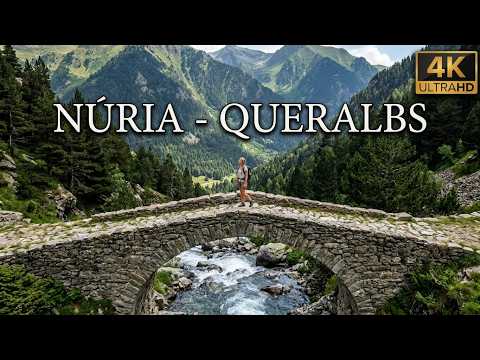
The village became closely connected with pilgrimage to Our Lady of Núria. Ripollès Turisme says a paved path was built in the twelfth and thirteenth centuries to ease the pilgrims' ascent. Much later, on 22 March 1931, the Núria rack railway opened and changed access to the valley. The train still connects Ribes de Freser, Queralbs and Núria. There is no ordinary road into the upper valley: visitors arrive by rack railway or mountain path. Queralbs is therefore a lived-in village, a railway stop and a starting point for walks.
Stone streets, castle and churches
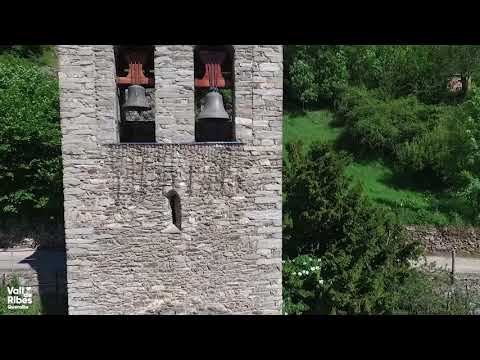
Set aside time for Sant Jaume de Queralbs when visiting the centre. The church is first mentioned in 978 and was rebuilt in the twelfth century. Its stone porch, arches and carved capitals are among the district's notable Romanesque features. The date of the first documented church should not be taken as the date of every part visible today. The surroundings offer views across the village and mountains, while the nearby lanes show how the houses fit the slope.
Remains of the castle survive in the lower part of the village, at a site from which the inhabitants could be defended quickly. These are remains rather than an intact fortress, and they make most sense as part of the village's wider historic landscape. Other places within the municipality have their own character. Fustanyà has the Romanesque church of Sant Sadurní; at Serrat, old bread ovens are attached to stone houses; and Vilamanya offers views over the valley. Ripollès Turisme also identifies the information centre of the Parc Natural de les Capçaleres del Ter i del Freser as a place to learn about the area's natural and cultural heritage.
Walking and the ascent to Núria
The marked “Queralbs integral” route connects the village with Vilamanya, Fustanyà and Serrat, offering a wider view than a walk around the main square alone. The district description notes that it crosses paths, a road and a level crossing, so follow the signs and take care. There is also a circular walk to Fustanyà, listed as a low difficulty itinerary of 5.7 km. Mountain conditions can change; an easy rating does not replace a check of the weather and path conditions.
The rack railway climbs from Queralbs station to the Vall de Núria. The upper valley has the sanctuary and mountain activities that vary by season, including walking, skiing and family recreation. Núria lies within the municipality of Queralbs, but it is a different place from the village centre. A short visit can focus on Sant Jaume and the stone lanes; with a full day, visitors can combine the village with the train and a walk suited to the season.
Food, accommodation and access
The town council's business guide lists places in the village including Bar XIX, Cal Litus, Hostal i Restaurant Les Roquetes and Apartaments Fontalba. The district tourism register also shows rural accommodation within the municipality and a hotel in the Vall de Núria. Staying overnight therefore need not require a return to Ribes de Freser, but the exact location matters: accommodation in Núria can only be reached by rack railway or on foot. Confirm opening times, bookings and services before travelling.
By road, the Girona provincial authority identifies the GIV-5217 as the link between Ribes de Freser and Queralbs. From Barcelona, drivers can take the C-17 towards Ripoll, continue to Ribes de Freser and then follow the GIV-5217. From Girona, the district visitor guide suggests reaching Ripoll via Olot and the Collabós tunnel or via Vic, before continuing to Ribes de Freser. Travellers can also reach Ribes by train and transfer to the rack railway for Queralbs or Núria. Check current train times and conditions on the mountain road before setting off.