Kaavi’s landscape seems to hold two opposite invitations: follow the water into a remote river corridor by day, then look up into a sky deliberately kept dark after dusk. Between them lie a working heritage farm, a village museum and a foundry that still tells the story of small-scale metal casting. The municipality in North Savo had 2,547 residents at the end of 2025, according to Statistics Finland. Its official visitor language calls the place “Ihan pimee”—a colloquial play on “really dark”—and the slogan has become more than a joke: in August 2026 the Syrjävaara site received Finland’s first Dark Sky Park certification from DarkSky International, as reported by the Regional Council of North Savo.
Kaavi celebrated 150 years as a municipality in 2025, but its human history reaches much further back. Archaeological inventories record Stone Age habitation sites around the Kaavinjärvi and Rikkavesi lakes. That evidence establishes ancient activity in the wider landscape, not a prehistoric town. The older villages formed in the early seventeenth century, and permanent settlement followed the 1617 peace of Stolbovo, according to a Metsähallitus study of the region’s slash-and-burn landscape. By the late eighteenth century, a parish grain store had become an important local institution: the present Eloaitta museum building was erected in 1845–1848, after the first grain store was established by royal decree in 1794.
Telkkämäki keeps a farming landscape alive
At Telkkämäki, history is not arranged as a row of objects behind glass. This 100-hectare protected area preserves the landscape created by slash-and-burn farming: deciduous growth, stone piles, old turnip pits and meadows maintained by grazing and cutting. The farm’s roots reach back to a croft recorded before the land division of the mid-eighteenth century; its buildings and yard have been restored to evoke the early twentieth century. Metsähallitus has carried out traditional slash burning there since 1993, and the municipality says the practice continues each summer. Visitors can follow two self-guided paths, about 900 metres and 1.9 kilometres long, to read the signs of that land use in the woods and open clearings.
Telkkämäki is a living conservation project as much as a heritage attraction. The burn is a management practice, not a staged performance on demand, and the farm buildings are not staffed every day. The municipality’s 2026 notice said there was no daily guide service that summer; the buildings opened during events or when staff were carrying out work on the land. Check the current calendar if you want a guided visit, and keep to the paths: camping and open fires are prohibited in the reserve.
Vaikkojoki: a route that rewards preparation
Kaavi’s largest outdoor journey follows the Vaikkojoki, a protected water route about 50 kilometres long from Lake Vaikkojärvi in neighbouring Juuka to the Kaavi waterways. Its character changes along the way. The first section is remote and can be shallow at ordinary water levels; the middle section has been restored after historic timber floating and includes rapids that challenge experienced paddlers; the final stretch is calmer, linking lakes toward the village. The municipality warns that the route is not a first-timer’s trip without a guide. Some rapids reach class III, so helmets, spray decks, suitable boats and a realistic assessment of water levels matter.
There are shorter ways to appreciate the river. At Rakkinekoski, a memorial recalls the hard work of log drivers who moved timber downstream. A marked walking and cycling route links Rakkinekoski and Makkarasärkkä, about five kilometres apart; the full out-and-back is roughly ten kilometres, while Rakkinepolku is a two-kilometre walk. A hut at Rakkinekoski is accessible by wheelchair, and shelters at Makkarasärkkä and Multiväärä offer places to pause. These facilities make the area more approachable than the full paddling route, though visitors should still check trail and bridge conditions. The municipality cautions that crossing the Rakkinekoski bridge in a passenger car is at the driver’s own risk.
Foundry, granary and a village centre
Kaavi’s heritage also comes from small workshops and shared institutions. The Juutila foundry in Vehkalahti has practised traditional sand casting of copper since 1881, making bells, small bells and other cast items. The old workshop became a museum in 2004; the visit is by arrangement, which preserves its character as a specialist collection rather than a walk-in attraction. In the parish centre, Eloaitta occupies the former grain store, a building tied to local food security before modern public services. The museum, maintained by the Kaavi parish society, brings together donated objects that document everyday life and the work of the community.
Today the municipality’s economy is more varied than its landscape might first suggest. Municipal employment figures for 2023 put 62.8 percent of the employed workforce in services, 21 percent in processing and 13.9 percent in agriculture and forestry. Kaavi describes itself as an industrial municipality, while tourism is supported by small operators offering accommodation, food, canoe hire, guided rapids, fishing trips and nature outings. At the central swimming beach, visitors will find a playground, exercise equipment, beach-volleyball court, changing rooms and toilets; Mönkkösaari has a public landing place for boats. Local summer theatres and the market calendar bring the scattered villages together, although dates and opening seasons change.
Darkness as a visitor experience
Syrjävaara, in Maarianvaara near the regional border, gives Kaavi a rare reason to plan a visit after sunset. The 90-hectare dark-sky park has viewing points and simple outdoor facilities; the private site says it is open year-round, but winter paths are left natural and snowshoes may be useful. The certification recognizes the protection of night darkness from light pollution; it does not guarantee a clear sky or an aurora. Give the area time, check weather and access conditions, and use lighting sparingly so that the dark adaptation of your eyes is not lost.
Kaavi lies about 60 kilometres from Kuopio, 95 kilometres from Joensuu and 45 kilometres from Rissala airport. Vilkku lists regional bus route 90 between Kuopio and Kaavi via Riistavesi and Juankoski; the journey planner and Matkahuolto show current departures and any seasonal changes. For drivers, plan from Kuopio or Joensuu using a current map, then allow extra time for the rural roads leading to Vaikko, Telkkämäki and Syrjävaara. Kaavi is not a single-stop destination: the river, heritage farm, village museums and dark sky sit far enough apart to make a two-day visit more rewarding than a hurried detour.
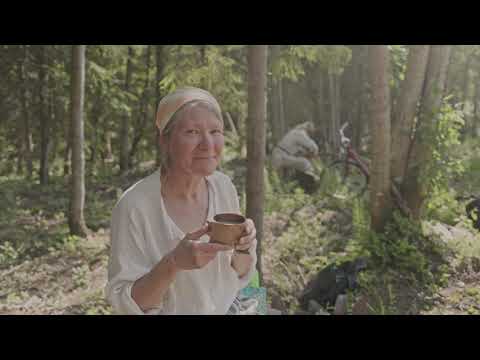 Kaavi in three films: heritage museums, Vaikkojoki and Eloaitta
 Liikkeellä luonnossa’s “Vaikkojoen varrella” identifies its subject as the Vaikkojoki, beginning at Lake Vaikkojärvi in Juuka and flowing toward Kärenjärvi in Kaavi; the description says this film was made on Kaavi’s side of the river. That makes it a location-specific introduction to the waterway rather than a paddling tutorial. The river includes remote and demanding sections, and the municipality advises beginners to go with a guide. Check water level, rapid classifications and equipment before planning a canoe trip.
 The August 2026 upload is titled “Kaavin kotiseutumuseo Eloaitta” and its description points viewers to the municipality’s museum information. Eloaitta occupies a former parish grain store and now presents local history through objects donated by residents. The upload’s description does not enumerate the objects or promise that the museum is open year-round, so this review stays with the confirmed subject. It is a helpful pointer for a heritage stop in the village centre; check the current seasonal opening schedule before visiting.