A lakeside town with a garden character
Gardone Riviera climbs from the western shore of Lake Garda into wooded hills, and its appeal lies in the meeting of water, planted terraces and cultural landmarks. ISTAT counted 2,593 residents in the whole municipality on 31 December 2024. That figure describes the year-round municipal population, not the seasonal visitor presence that has long shaped the lakefront. The town is small enough to explore on foot in parts, but its attractions sit at different levels, so a visit is easier when planned around the slopes and current transport.
The lakeside promenade and the older resort architecture recall Gardone’s Belle Époque years. The Alto Garda Bresciano Park describes the late nineteenth and early twentieth centuries as a period when the town became an international health-resort destination. The Grand Hotel Gardone opened in 1883, and the Savoy Palace followed in 1906. This history still matters: hotels, gardens and visitor services are not recent additions to a fishing village but part of a resort economy established over generations. Today, cultural tourism and the lake setting remain visible in the local visitor offer, alongside the daily life of a residential comune.
A documented community, not a single foundation legend
The earliest archival reference to the commune identified in the Italian Ministry of Culture’s SIUSA catalogue is a document of 30 March 1353 naming local consuls. It is evidence of an organised community by that date, not a claim that the settlement began then. The same archival account places Gardone among the communities of the Salò Riviera in 1493 and describes a territory historically made up of several local lands and hamlets. That layered geography helps explain why the municipality is more than its best-known lakeside strip.
The name most closely associated with Gardone today is Gabriele d’Annunzio. He rented Villa Cargnacco in 1921, bought it later that year, and developed the Vittoriale degli Italiani with architect Gian Carlo Maroni between 1921 and 1938. The foundation describes it as a complex of buildings, roads, squares, gardens, water features and an open-air theatre, designed both as the poet’s final residence and as a memorial to his public life and the Italian experience of the First World War. Visitors encounter an intentional, highly personal landscape rather than a neutral period house: the Prioria, the park, the museums and the monumental objects all form part of d’Annunzio’s self-fashioned legacy.
Two very different gardens
Gardone’s horticultural identity has another strand in the Heller Garden. Arturo Hruska began transforming a vineyard here in 1903, combining plants from different climates with water, paths and a rocky alpine setting. André Heller acquired the garden in 1988 and added contemporary art to its botanical composition. The current garden foundation describes a collection of more than 3,000 species. It is not simply a formal flower garden: its changes in level, water, vegetation and sculpture make slow walking part of the experience. Opening dates and access conditions change seasonally, and the narrow paths and steps make it unsuitable for some visitors using wheelchairs or strollers; check the garden’s current guidance before booking.
The Vittoriale park is a contrasting landscape on a hillside: nine hectares of paths, terraces, small squares, groves and garden spaces assembled as part of d’Annunzio’s monument. A day can be devoted to the complex alone, especially if visitors want to enter the house and museums rather than see only the exterior. The two gardens therefore tell different stories: one is an artistic and botanical collection shaped across generations, the other an autobiographical monument whose architecture and landscape were conceived together.
How to make the most of a visit
Begin at the promenade to understand the resort town’s relationship with the lake, then choose one major garden or allow enough time for both. The Vittoriale’s official visitor guide recommends arriving by road via the SS45bis from Salò or Riva del Garda; follow current signs for the entrance and parking. Gardone has no railway station. Arriva’s 2026 timetable lists the LN005 route through Gardone Riviera, including a Vittoriale stop, toward Salò and onward connections toward Brescia. These services make a car-free visit possible on suitable days, but departures vary by day and season. Check the live operator timetable and the return connection before setting out.
Salò is the closest larger lakeside centre on the bus route, while Toscolano-Maderno is another neighbouring town on the western shore. The wider Alto Garda Bresciano landscape begins behind the waterfront, with hill paths and viewpoints beyond the resort core. If combining towns, leave time for transfers and check seasonal lake and bus services rather than assuming frequent departures. The municipal culture and tourism office can help with current local information; museum tickets, room access, concerts and garden opening hours should be verified directly with the organisers.
 Gardone Riviera in three films: lakeside town, Vittoriale and Heller Garden
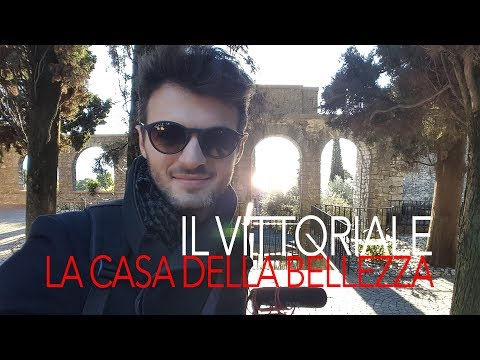 Gio Del Bianco’s 2017 film concentrates on the Vittoriale degli Italiani. The description presents a walk through the park and gardens, making this a more focused cultural preview than the general Gardone vlog. It is useful for understanding why the complex can occupy a substantial part of a visit, but its publication date means current access, exhibitions and room openings should be confirmed with the foundation.
 Ettore Colombo’s 2024 visit is devoted to the Heller botanical garden. The published description points to plants from around the world, themed areas, ponds and artworks, giving this film a clear nature-and-garden focus distinct from the town overview and the Vittoriale visit. Use it as a visual preview, then check the garden’s seasonal calendar and accessibility information before travelling.