Enonkoski is best understood through the water that has shaped both work and travel here. The municipality lies on Lake Saimaa and counts as an archipelago municipality: its roughly 452 square kilometres include about 129 square kilometres of water and some 840 kilometres of shoreline. At the end of 2025, 1,273 people lived in the municipality as a whole, according to Statistics Finland’s municipal series and the municipality’s current overview. That is not a population figure for the compact church village alone. The settlement’s scale is small, but its landscape opens into bays, islands, forest and the sound of the Enonkoski rapids.
A working river and a glassworks on the lake route
The rapids were not simply scenery. A municipal planning report citing the Finnish Heritage Agency’s register dates the water-powered saw at Enonkoski from 1777 into the early twentieth century. This is not a preserved factory complex: the report notes that most old buildings have disappeared, with a storehouse and traces of channels among the surviving elements. That helps explain why a walk through the village can feel quieter than its industrial past would suggest.
On Kangassaari, glassmaking made use of the same resource economy. A municipal anniversary publication says the glassworks operated from 1858 to 1903, burned waste wood from the sawmill, and sent bottles to markets that included St Petersburg. In the 1890s it also produced window glass. Timber, water transport and manufacturing were connected: the lake was a route for logs and finished goods as well as the setting for nature excursions today. The municipality’s current business page describes a varied field of small enterprises and an important role for entrepreneurship, so the contemporary economy is broader than visitor services alone.
Church, bridge and local memory
Enonkoski became a municipality in 1882, though the municipal overview notes settlement in the area since the Stone Age. Those are different historical scales; neither supports a claim of an ancient town foundation. Local records preserve a more recent turning point. A municipality-hosted anniversary publication recounts that a church boat returning from Kerimäki capsized in 1858 and eight people drowned. A first church was built locally in 1859. The municipal visitor page says it served until 1884, when it apparently burned after a lightning strike; the replacement church was completed in autumn 1886. A municipal guide says the tower cross recalls the boat tragedy, a memorial detail that keeps the account present without turning it into legend.
In the centre, the single-span slate-stone arch bridge was built in 1903–1904 and is now designated a museum bridge. Nearby, the local-history museum occupies a grain store built in 1880 and moved to its current location in 1917. It became a museum in 1973 and opens by arrangement, so contact the local association before making it the fixed point of a day trip. The church is another village landmark; check with the parish about access to the interior.
Kolovesi: a protected landscape best approached slowly
Kolovesi National Park gives Enonkoski its largest-scale outdoor experience: a maze of islands, steep rock faces and quiet coves that shelter the endangered Saimaa ringed seal. Prehistoric rock paintings are among its best-known cultural traces. Metsähallitus says the paintings and the cliff of Ukonvuori are reached only by water. Paddling is therefore more than recreation here; it is a way to understand the archipelago, while access rules protect wildlife and fragile heritage.
The municipality lists three short hiking trails totalling about nine kilometres, two on the mainland and one on an island. Conditions and permitted access are seasonal. Current park rules allow the Nahkiaissalo trails year-round, the Mäntysalo trail from 1 May through 31 December, and restrict all park islands from 1 January through 30 April. Combustion-engine boats are prohibited in nearly all of the park. Metsähallitus also notes there are no officially marked water routes, even though it describes paddling circuits and possible onward journeys toward Linnansaari or Kermajärvi. Bring a current map, check notices and do not assume a route is open simply because it appears on an older map.
Visitor services and a practical route
In the church village, Kolovesi Nature House combines a small park exhibition with maps and seasonal visitor advice; the municipality lists free entry and a summer café. The local-history museum is open by arrangement, and a public parking area at Hyypiänniementie 6 has a septic-tank emptying point for motorhomes and caravans. Savonlinna is the nearest named town; Heinävesi is another neighbouring municipality. The municipality places Savonlinna Airport about 20 kilometres from the centre.
By public transport, check the Enonkoski–Savonlinna connection before departure. Savonlinja notes service changes from 1 June 2026 and points passengers to Matkahuolto for current times. Frequency depends on the day and season, so allow for the return journey and check the stop serving your destination. A rewarding visit can combine the bridge and church village with a separate, carefully planned Kolovesi outing; the park’s water access, seasonal restrictions and limited services make it better to leave time than to rush between highlights. Confirm opening arrangements, trail notices, water conditions and timetables shortly before travelling.
 Enonkoski in three films: winter village, lake country and monastery
 Petri Saarelainen’s July 2020 upload is titled simply “Enonkoski,” without naming a single landmark or activity. That broad framing makes it a useful companion to a guide that treats the municipality as more than one attraction, but the title alone does not establish a full itinerary or current service information. Use it as a general visual reference and cross-check specific places, museum access and seasonal visitor services with the municipality before travelling.
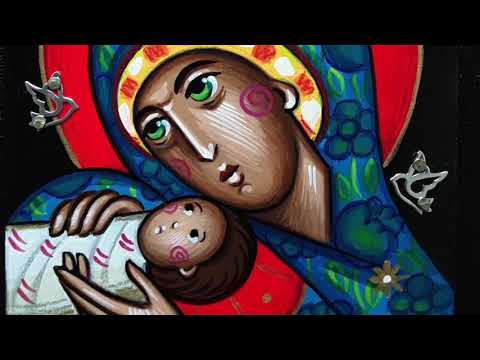 “Rukous kantaa erämaan halki,” published in May 2020 by Enonkosken luostariyhteisö Ihamaniemi, brings a spiritual theme into a set otherwise centred on the village and its landscape. The title and publisher make it a distinct introduction to the monastery community’s religious perspective, which matters in a municipality where the community is based in a former village school. Treat the film as an account of faith and community, not as a notice of visitor access; contact the community before planning a visit.