Combourg is often introduced through a castle and a writer, but the town becomes more interesting when the two are set beside the lives that continue around them. Its old centre, a lake below the fortress, a Monday market and a railway station on the Rennes–Saint-Malo line make it both a literary destination and a working small town in northern Brittany. INSEE counted 6,411 residents across the whole commune in 2023; that figure includes the surrounding area, not only the historic core.
Three old centres, one town
The municipality describes Combourg as a place shaped by three neighbouring nuclei: the parish town, the seigneurial settlement around the castle and the priory founded west of it. Their relationship can still be read in the compact centre, where lanes and public spaces gather around the church, market square and fortress. A covered prehistoric passage at Chevrot is evidence of human presence in the area during the Neolithic, but it is not proof that the present town was founded then.
Local history attributes the first feudal motte to Guinguené, who installed his younger brother Rivallon there, and says Rivallon invited Benedictine monks from Marmoutier to establish a priory. The surviving castle is a later, layered structure: the municipality describes a medieval fortress developed between the twelfth and fifteenth centuries. The town’s proposed Celtic reading of its name as a “border valley” is a local interpretation, not a settled fact that needs to be repeated without qualification.
Chateaubriand’s formative landscape
Combourg’s literary identity comes from the years François-René de Chateaubriand spent at the castle, not from being his birthplace. He was born in Saint-Malo in 1768. His parents acquired the county in 1761 and moved their family to Combourg in 1777; the future writer was eight when he arrived. In his memoirs he later connected the woods around the town with the beginnings of his imagination. That personal testimony helps explain why the landscape, lake and castle became part of the story told about French Romanticism.
The castle remains a private residence open to visitors on a seasonal calendar. Its guided interior visit lasts about 45 minutes and focuses in part on Chateaubriand; the adjoining park covers about 25 hectares. The site is not step-free: the castle tour includes many stairs, and a wheelchair cannot access the interior. The famous black cat and wooden-legged ghost belong to the castle’s lore and to the atmosphere of Chateaubriand’s recollections. They are legends, not verified events. A separate local tale explains the lake through a quarrel involving Rivallon and a woman whose revenge supposedly caused a spring to overflow; it, too, is a story rather than a documented account of the water’s origin.
Look beyond the fortress
Combourg rewards a walk through its streets before or after the castle. The Maison de la Lanterne, built in 1597, combines a granite Renaissance façade with a defensive-looking tower; the municipality says it once served as a lookout and public light. In season, it hosts temporary exhibitions by artists and craftspeople. Nearby, the sixteenth-century Relais des Princes recalls the town’s role at a crossroads between routes linking Rennes, Saint-Malo, Dinan and Fougères. The Cour du Temple preserves architectural details associated with a former Templar and Hospitaller estate, while the name of the Maison du Pendu is tied to local tradition rather than a proven episode.
Notre-Dame church is a prominent nineteenth-century neo-Gothic landmark, consecrated in 1887. Its monumental scale earned it the local nickname “cathedral church,” though it is a parish church. The square nearby, now Place Albert-Parent, once held market halls; today the Monday market stretches through the centre from the church to the square. The municipal listing describes stalls selling produce, meat, fish, bread, prepared food, textiles and crafts. Visitors should check local notices for changes on public holidays or during works.
Lake paths, local nature and a changing route
The Lac Tranquille lies below the castle and is part of the town’s everyday landscape as well as its literary image. The municipality identifies the lake and the Étang de Trémigon as ZNIEFF type I ecological-interest areas. These designations recognise habitats and species of interest; they do not mean every bank is a protected visitor facility. Walkers can follow the Chateaubriand interpretation route, with eleven panels on the north shore, and a separate twelve-panel heritage trail through the centre connecting buildings such as the Maison de la Lanterne, church and fortress.
The town’s 2026 public-works notice schedules repairs to the footpath around the lake for the end of the year. Check local information before setting out, since access may change as work begins. The municipal campsite, Le Vieux Châtel, sits about 500 metres from the centre by the southern shore and lists a 2026 opening season through 30 October; confirm dates and services directly, as this is a seasonal facility.
A service town as well as a visitor stop
INSEE recorded 2,860 jobs located in the commune in 2023 and 263 employer establishments active in the last week of December 2024. Of those establishments, 65.4% were in commerce, transport and other services; this is a count within a defined statistical scope, not a complete description of every resident’s work. The figures fit Combourg’s role as a service centre for its rural surroundings. The municipality points visitors and residents to a town centre with shops and restaurants, a cinema, a public media library, an aquatic centre and health services. A free summer shuttle served Combourg and the other communes of Bretagne romantique in July and August 2026, with advance reservation; that seasonal timetable should not be assumed to run year-round.
Getting there and exploring nearby
Combourg station is on the regional rail corridor between Rennes and Saint-Malo, with direct TER services listed by the operator. The station is outside the old centre; allow roughly half an hour on foot to reach the castle and check current timetables and any engineering changes before travelling. The municipal access guide gives road distances of about 40 kilometres from Rennes via the D137 and D795, and 44 kilometres from Saint-Malo via the D137 and D794. Driving times vary with traffic. The castle’s visitor information also identifies Mont-Saint-Michel as a possible excursion by car, but travellers should plan the route and parking separately.
A useful day in Combourg can combine the market or heritage trail with a walk by the lake and, when open, the paid castle visit. This makes room for the town’s less famous evidence too: the church square, old inns, public services and ordinary shops that show why Combourg is more than a Romantic backdrop. Confirm opening calendars, transport and lake-path access before departure.
 Combourg in three films: heritage, a writer and local legends
 France 3 Bretagne reports on the best-known ghost story attached to Combourg, linking the castle with the childhood of Chateaubriand and the tale of a black cat beside a wooden-legged figure. The broadcaster identifies a castle employee and a guide among its contributors, so the piece is useful for understanding how the legend is told locally. Its supernatural premise remains folklore, not verified history. The video is a cultural report, not evidence that a haunting occurred.
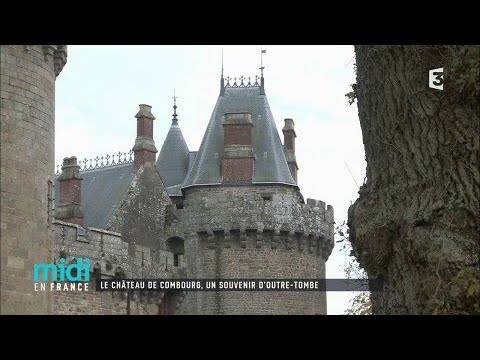 Midi en France frames the castle as a memory beyond the grave, an allusion to the writer whose childhood is inseparable from the public image of Combourg. The short segment gives a separate television perspective from the castle festival archive and the France 3 folklore report. The title alone does not establish every detail of its historical account, so use it as an introduction to the literary association and consult current visitor information for the building and its opening calendar.