Canale sits in the Roero, among Piedmont’s vineyard hills and the deeper folds of the Borbore valley. The town center is not a hilltop hamlet: its civic life gathers around Piazza Italia, while the Malabaila castle and a ring of older lanes give the settlement a distinct historic edge. Vines and fruit-growing fields tie the surrounding countryside to the town, but Canale is also a working municipal center, with offices, a public library, churches and a yearly calendar shaped by local associations.
ISTAT’s 2025 demographic balance records 5,444 residents for the whole municipality on 1 January 2025. This is the Comune’s population, including the surrounding territory, not a count of people living only in the central streets. Canale lies in the province of Cuneo, on the Piedmont side of the Roero. Alba is the nearest larger urban reference in the public-transport corridor; Montà, Vezza d’Alba, Monteu Roero and other nearby communities make useful additions for a visit focused on wine, landscape and local heritage.
A planned medieval town and its layered landmarks
The municipal account dates the foundation of “new Canale” by the free Comune of Asti to 1260. That is a documented medieval beginning for the settlement described by the town, not proof that no one lived in the area earlier. The castle’s own municipal page places its origins in the thirteenth century and describes a defensive role before it became a noble residence. The name Malabaila recalls the family that owned and altered the property over later centuries. A park of more than a hectare surrounds the building; a moat once encircled it, although it has since been filled in.
Today the castle remains in private ownership. The municipality lists guided visits by appointment and identifies an enoteca and restaurant at the site; visitors should contact the property directly to confirm what is open and when. From the castle, the route back toward Piazza Italia passes the core of civic Canale. The municipal building itself belongs to the town’s medieval story: the local account connects a new seat of government with the 1260 foundation and dates the present structure to the thirteenth and fourteenth centuries. The square is therefore more than a picturesque pause; it links administration, everyday services and the old center.
Church history adds another timeline. The municipality says a church dedicated to Saint Stephen is mentioned in 1213, while the name San Vittore de Canalibus appears in an Asti church register of 1345. The parish church changed through several stages: it was reshaped in the late fourteenth century, became the parish church in the sixteenth, received its present Baroque façade in the 1720s, and was enlarged between 1748 and 1757. The campanile visible today dates to a twentieth-century intervention. These dates describe a building renewed over time rather than a single intact medieval monument. The same municipal heritage directory lists the church of San Giovanni Decollato and other local places of worship; access and service times can vary.
Roero wine country, peaches and a town that gathers
Canale’s economy is closely tied to agriculture and wine, though no current municipal breakdown was found to rank employment by sector. The Roero and Roero Arneis appellations include Canale’s entire municipal territory, according to the appellation consortium. Vineyards are thus part of the local landscape and of a regulated production area, not just a tourism image. The town also celebrates its fruit-growing identity through the Fiera del Pesco. The municipality described the 2026 fair as its 83rd annual edition, combining food and wine with public entertainment. Dates change each year, so the next program should be checked before planning around the event.
The regional visitor itinerary for Roero connects Canale with wine-growing hills, walking routes and cultural stops in nearby towns. It is a good base for a slower circuit: spend time in the center, arrange a castle visit, then continue by road through the surrounding communities rather than expecting every attraction to be open without notice. Roero’s ridged landscape is made for short drives and walks, but trails and cellar visits need their own checks for access, weather and booking. A tasting should be arranged with the producer or venue, not assumed to be a walk-in service.
Getting there and planning a visit
Canale is linked by road to Alba and the neighboring Roero towns. Public transport is available on the regional bus network: the current GTT timetable lists line 2014 on the Torino–Poirino–Alba corridor and includes stops in Canale. Service patterns vary by weekday, school calendar and direction. Check the live timetable for the exact stop, return journey and any changes before leaving; the schedule is not a promise of a frequent all-day connection. For a broader Piedmont trip, rail connections can be planned through Alba, with a separate bus leg to Canale.
In the town, Piazza Italia is the practical starting point for the municipal offices and civic library. The castle is visitable by appointment rather than on an assumed open-door basis, and church hours are tied to religious use. The municipal portal is the best place to check current openings and public notices. Canale rewards a visitor interested in how an inhabited town fits into a larger rural economy: the old castle, the successive parish church and the modern fair all point to different ways this center has served the Roero, from medieval administration to wine and fruit today.
 Canale in video: borgo, racconto locale e festa del Roero
 At 35 minutes, Paolo Destefanis’s locally authored documentary is a much more personal portrait. Its description promises origins, traditions, religious practice, folklore, hills and everyday life, so it offers a layered sense of how residents narrate their town rather than a checklist of sights. Allusions to the Theban Legion or other folklore should be read as local tradition, not proof of Roman-era events. It is a reflective companion to a walk, not a current visitor-services guide.
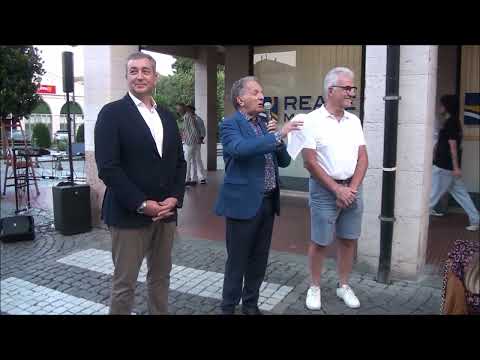 This 19-minute recording documents the second edition of Canale in Festa, organized by the Enoteca Regionale del Roero and published in July 2025. Its value is the glimpse of a particular public gathering and the role of local wine culture in civic life. It covers only one edition and its first part; the date, program and opening details for any future event must be checked with the municipality or organizers.